


Operations teams hold the business together with spreadsheets and duct tape: trackers, dashboards, approval flows, all one accidental sort away from chaos. Vibe coding can turn those into real internal apps, and ops is usually building for known internal users, which makes it a great fit when the tool handles data and permissions properly.
Most relevant: dashboards, project trackers, and booking apps.
To help you move past the fragile prototype stage and avoid the “Day Two” maintenance trap, we ranked these tools by operational survival. We looked at how each system handles real-world scaling, the risk of credit-draining bug loops, and the ease of managing granular row-level data access. For ops teams, software must be secure and reliable from day one; standard setups should not be left to an AI model that compiles successfully but produces security vulnerabilities roughly 45% of the time. This list is ranked for business-grade durability, not just raw prototyping speed.
1. Softr - the operational hub that avoids code debt
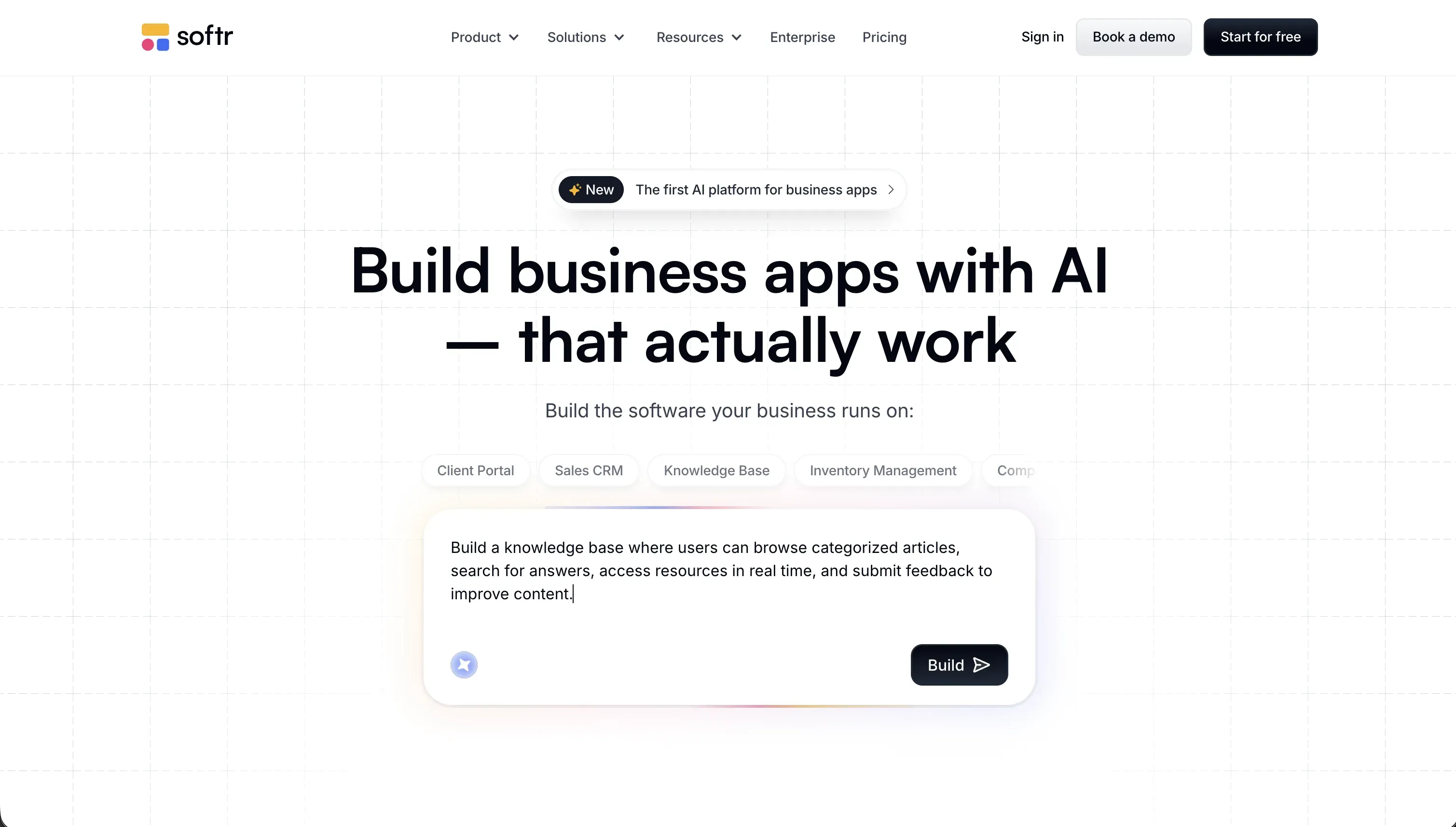 Softr homepage snapshot
For most operations teams, 80% of what you need is standard infrastructure: tracking tables, secure forms, user roles, and simple notifications. Softr is the best overall solution because it provides this plumbing as native platform features. You do not have to prompt a security model or recovery flow into existence. Instead, you define user groups visually and let the AI Co-builder assemble responsive, secure blocks. This ensures client-side data exposure is impossible and keeps sensitive configurations on the server side.
Evolving your app post-launch is incredibly direct. Adding database fields or modifying permissions requires simple visual adjustments, completely bypassing credit-burning, circular debugging sessions. It connects effortlessly to your existing operational data in Google Sheets, Airtable, or Softr’s native, high-performance databases. If your ops team wants to build real databases and internal portals in an afternoon without managing technical container configurations, this is the undisputed winner. Full review.
2. Retool - heavy data operations for the script-literate
 Retool homepage snapshot
Retool is a powerhouse for administrative consoles and dense data pipelines. Its component library features over 100 deep data-handling tools (schema editors, advanced tables, charts) that are perfect for complex back-office systems. Connecting to company SQL platforms or internal REST APIs is straightforward, and the environment supports custom JS scripts to orchestrate state and map nested objects. It also offers dedicated workflow pipelines to automate scheduled cron tasks.
However, Retool is not a builder for non-developers. Designing logic or setting permissions requires comfortable SQL query structures and state handling. The pricing model is also seat-based, charging per user, which is fine for small core operational teams but becomes highly expensive when scaling external permissions for portal guests or vendors. Choose Retool if you have developer resources available and need complex, direct visual query panels built on top of high-density corporate databases. Full review.
3. Replit - unconstrained code automation with AI guidance
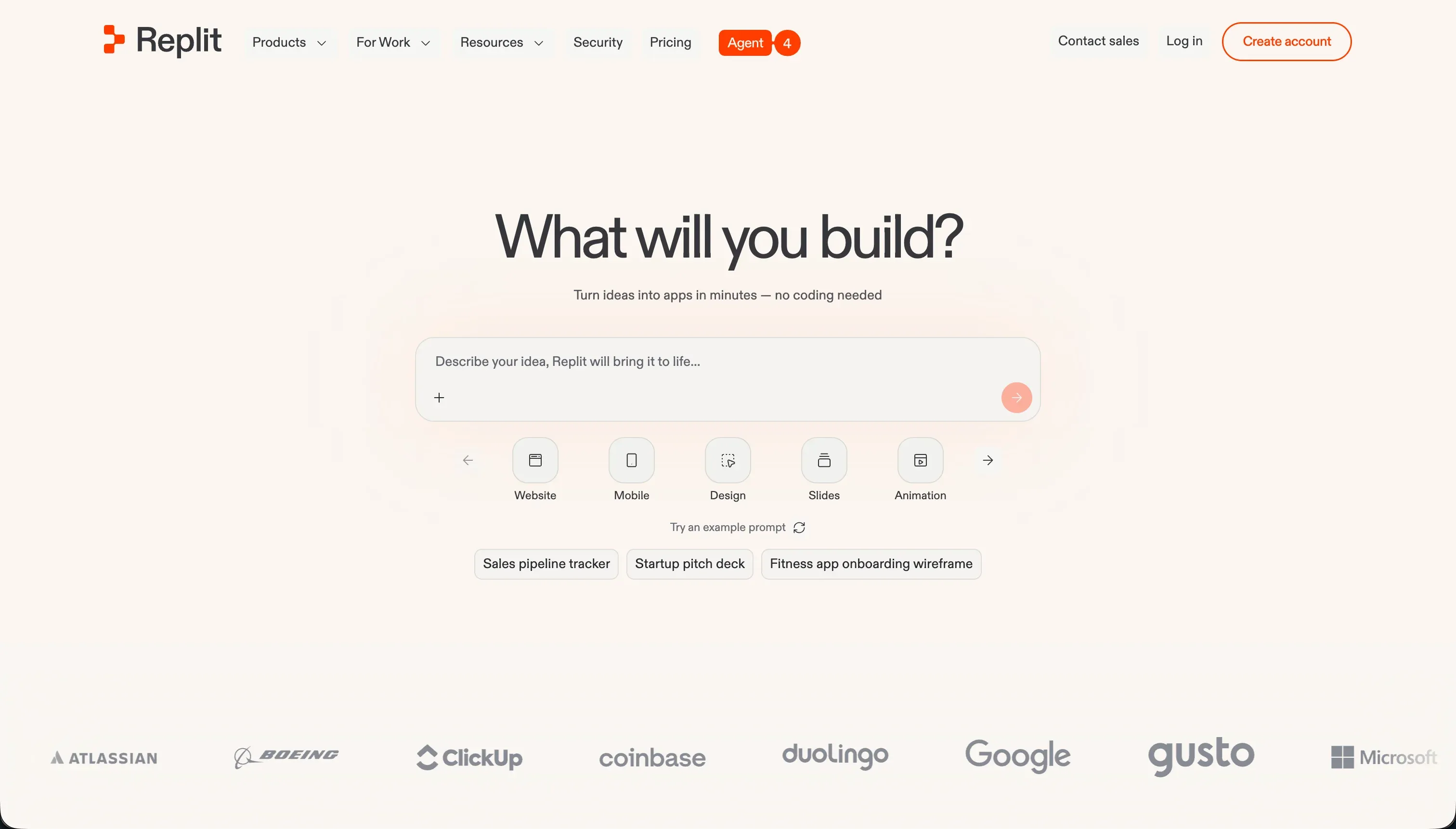 Replit homepage snapshot
Replit represents the strongest environment for operations teams who want custom backend scripts and total control over their hosting. Its Agent model builds full-stack applications by managing containers, installing exact package dependencies, and spinning up relational databases. For technical ops engineers, this translates to limitless automation flexibility - you can build Slack bots, automated data sync managers, and specialized schedulers using Python, Rust, or Node.
But because Replit is a developer IDE, you are fully responsible for the underlying infrastructure code. Operations teams often run into infinite bug loops where the agent continuously creates and attempts to fix package dependencies, rapidly eating up monthly credits. Ops builders must possess a software engineering baseline to catch agent deployment errors and secure sensitive API strings inside environment files. Full review.
4. Bubble - highly customizable relational logic with a steep learning curve
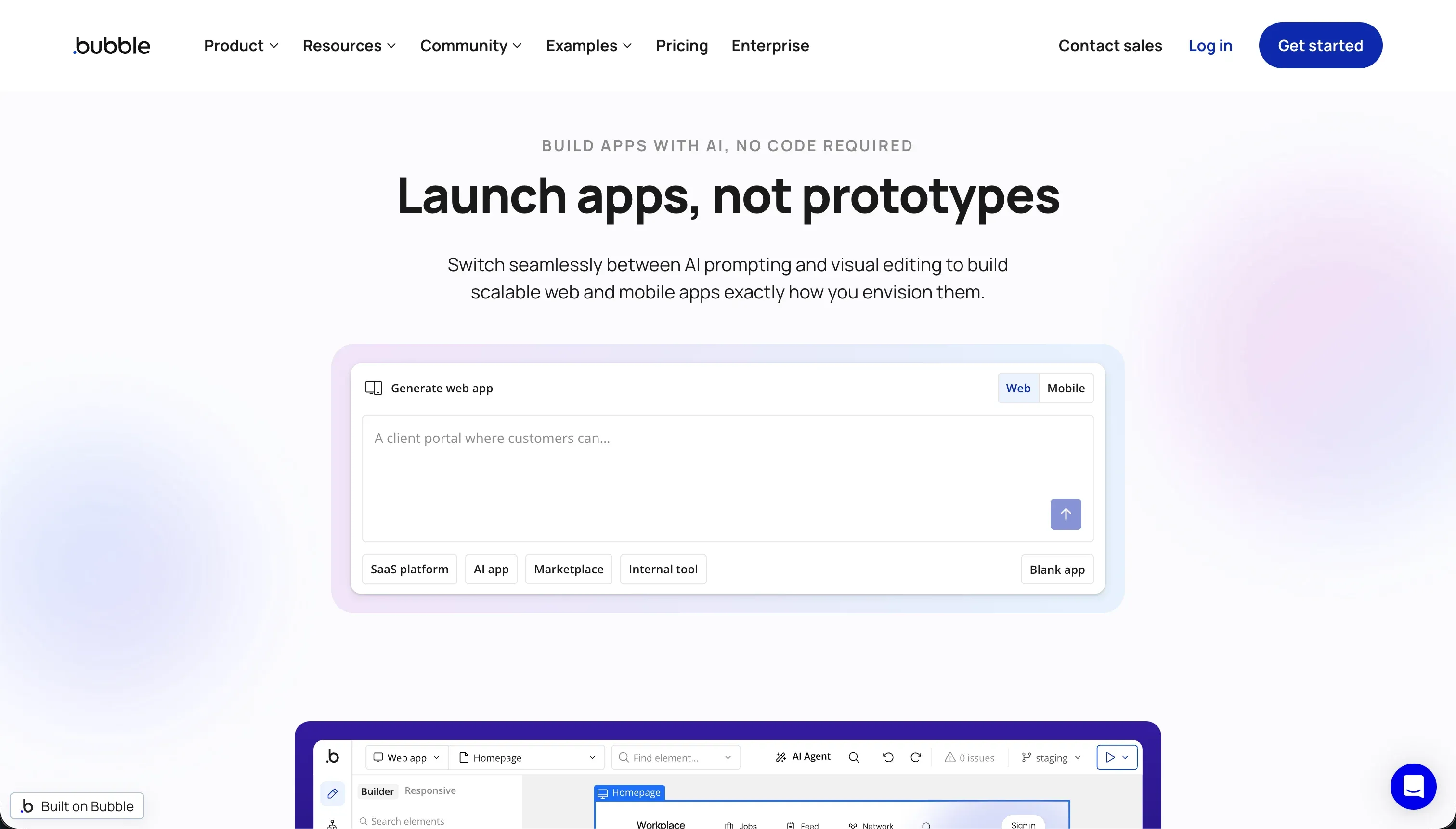 Bubble homepage snapshot
Bubble excels at complex multi-user workflows. Its visual editor is completely unconstrained by templates, and its server-side database privacy rules can secure records down to specific fields based on user types. If your operations flow requires multi-tier approvals, conditional booking steps, and integrations with multiple payment gateways or external services, Bubble’s visual architecture can map it cleanly.
The cost of that power is an incredibly demanding learning curve. Ops builders must spend several weeks learning backend workflows and visual state values to prevent security leaks. Furthermore, its workload unit (WU) pricing can spike unexpectedly if database searches or loop variables are unoptimized. Pick Bubble when you need custom operations workflows and are ready to invest the hours required to master database architectures. Full review.
5. Cursor - the developer’s power tool for accelerated internal builds
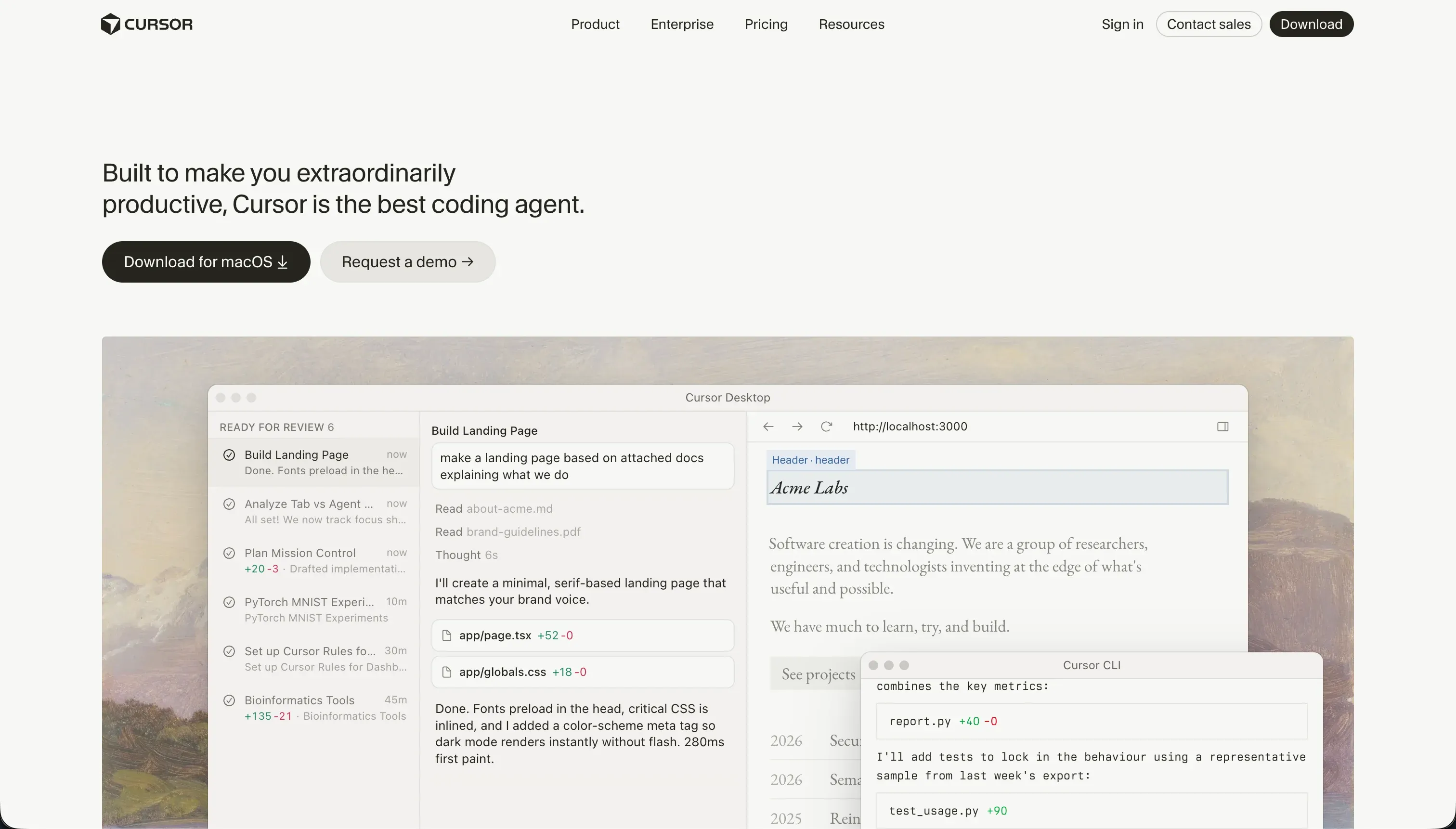 Cursor homepage snapshot
If your operations department includes a software engineer, Cursor is the absolute fastest way for them to build. It indexes your entire directory, providing a context-aware composer agent that writes clean code across multiple files. It handles complex manual tasks like creating API schemas and setting up local servers with high efficiency, turning a developer into a rapid-fire internal tool squad.
As on any IDE, there is no visual form builder, instant database, or ready-to-go hosting. Your engineering team will need to construct and deploy the authentication, server logic, and web pages from scratch. This is a professional coding platform, making it an outstanding accelerator for engineering-infused ops teams, but completely inaccessible to standard business users. Full review.
Also tried: the tools that didn’t make the cut
We also evaluated a few specialized environments that did not make the main list. Base44 offers a convenient, conversational approach to full-stack generation, but its reliance on usage-based integration credits can lead to highly unpredictable monthly bills, and users report stability issues in production environments. WeWeb provides a visual layout engine with clean Vue.js code export, but its decoupled frontend architecture requires you to build, connect, and pay for an independent external database (like Xano or Supabase) to manage your users’ records, creating high configuration complexity for rapid operational tasks.
How to pick your operational software tool
Selecting the right system depends entirely on who will keep the tool running through changes.
Who is actually responsible for tracking bugs and modifying fields in six months?
| Your team profile | Build on |
|---|---|
| Non-technical business operators | Softr (visual permissions, flat plans, zero database plumbing errors) |
| JavaScript-literate backend operators | Retool (dense visual blocks, custom query mapping) |
| Engineers who want complete control | Replit (full cloud container automation) |
| Visual scale developers | Bubble (highly configurable visual logic) |
As a concrete rule of thumb: do not trust an AI agent with your data security. If you are building with generative code-builders, manually test your permissions by logging in under two different test accounts to verify that user-restricted data is actually locked on the server side, and never hardcode API keys into public script repositories.