


Booking and scheduling apps look simple and aren’t: availability rules, double-booking prevention, confirmations, and a public-facing flow that real customers use without your help. When it breaks, you lose the booking and the customer, so reliability beats novelty here.
This ranking is part of the internal tools family. We evaluated these builders based on what survives real client use rather than raw demo-generation speed. When selecting a tool for scheduling, you need:
- Watertight visual calendar logic that prevents double-booking.
- Timezone handling that doesn’t drift and clear user authentication boundaries.
- Silent data corruption safeguards that prevent overlapping slots.
1. Softr - the ultimate setup for visual, secure schedule management
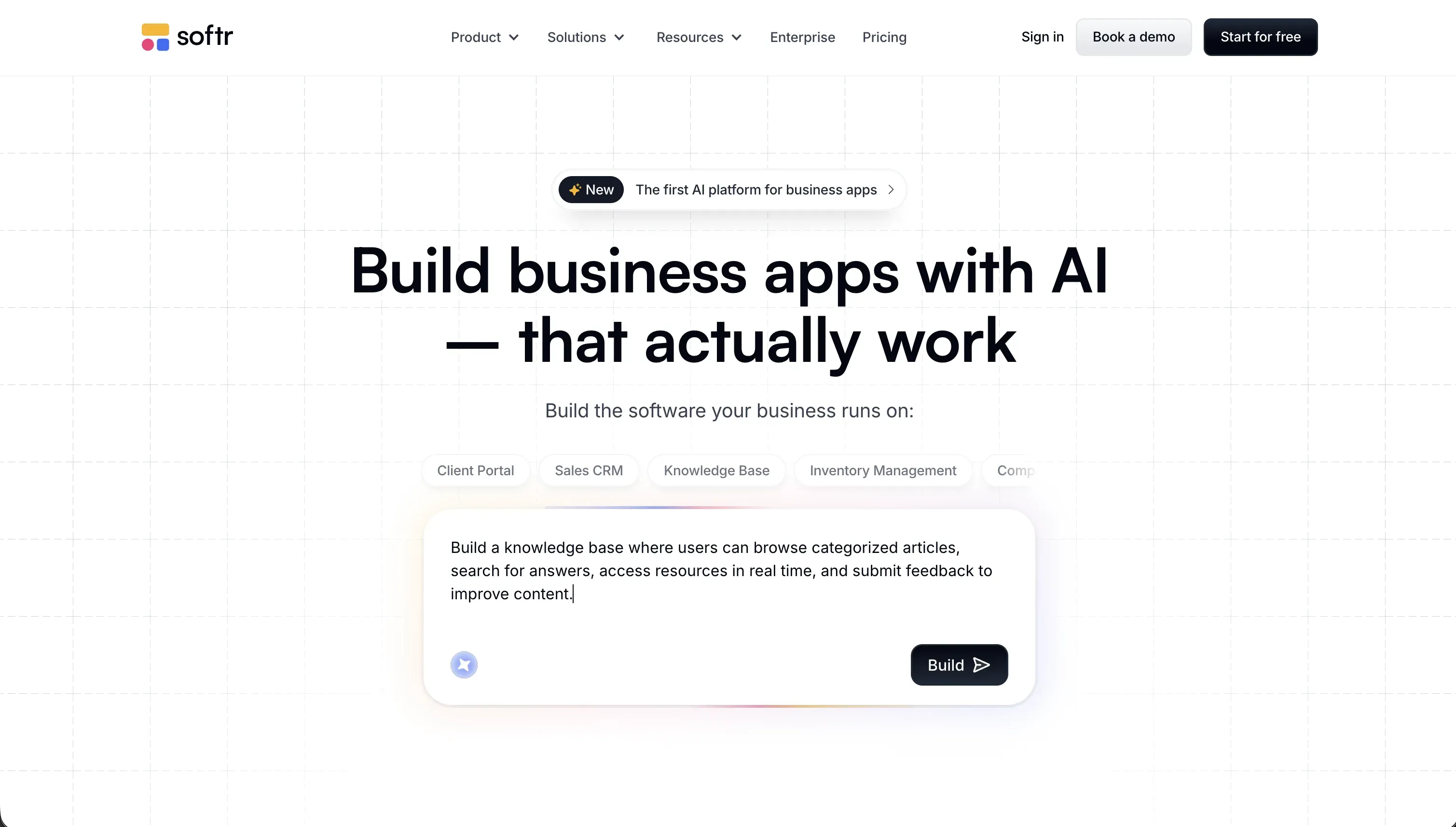 Softr homepage snapshot
Building a scheduling app requires a secure, stable front-end and a backend that doesn’t hallucinate dates. Softr excels here by treating authentication and calendar interfaces as reliable platform features. You can prompt its AI Co-Builder to generate your booking tables, client lists, and calendar views in a single pass, then visual controls allow you to restrict booking edits to specific user groups without writing a single database rule manually.
Because Softr is an all-in-one ecosystem with native Softr Databases, dates and calendar slots sync natively. If you need hyper-custom scheduling features, the built-in Vibe Coding block allows you to insert React elements like a visual timeline without sacrificing the underlying platform security. It handles the structural complexity of user profiles, so you can focus entirely on your booking workflow. Full review.
2. Replit - the best developer environment for custom booking algorithms
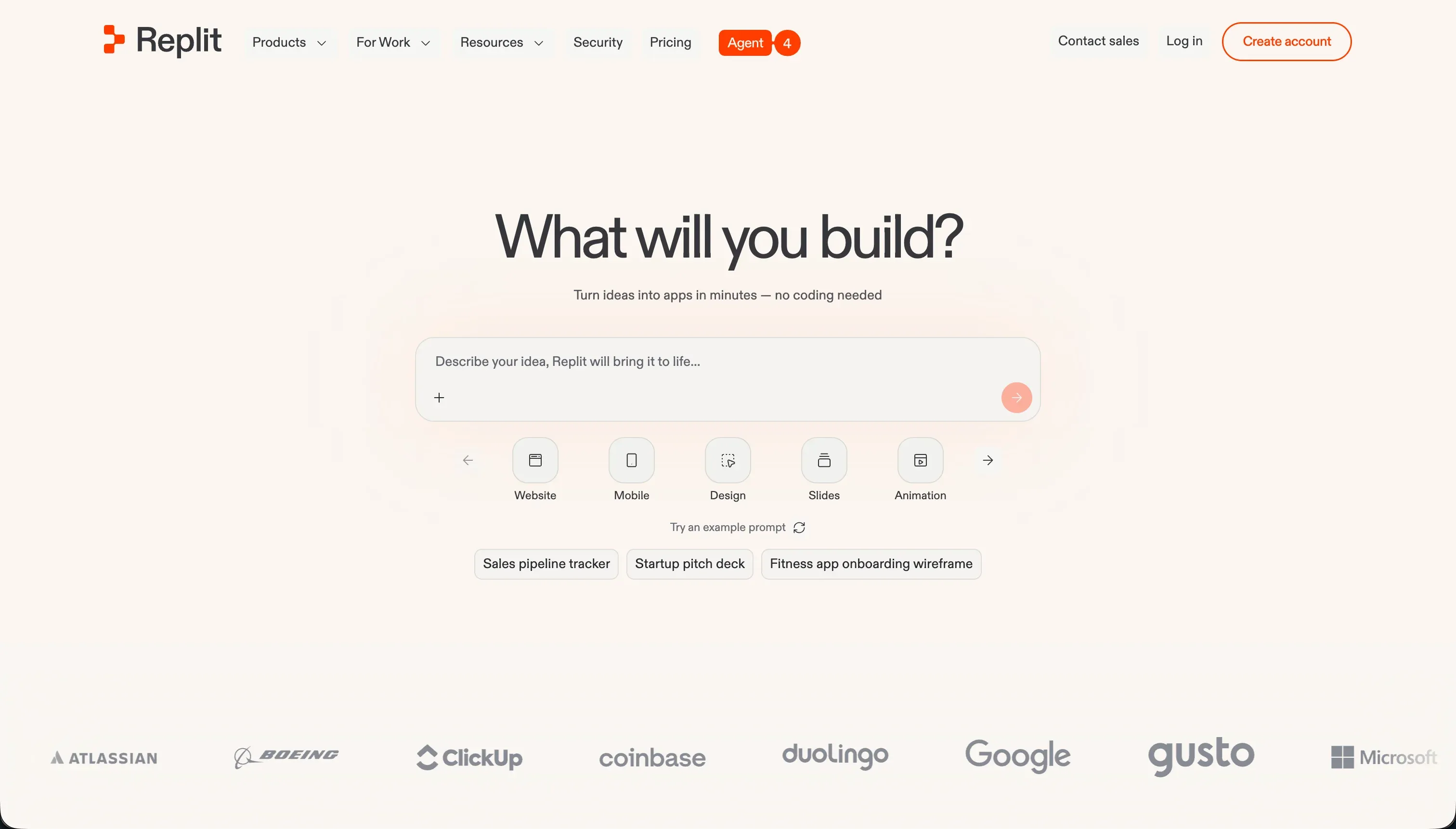 Replit homepage snapshot
When your booking logic requires complex algorithms, such as routing bookings based on team capacity or geographical zones, you need real code. Replit’s Agent can build a custom database backend, write express route handlers, and deploy a PostgreSQL database automatically.
However, writing custom reservation systems comes with hefty infrastructure overhead. Users are responsible for configuring environment variables securely, and Replit’s effort-based pricing can drain computational credits quickly when troubleshooting complex timezone bugs. We recommend this route primarily if you have the technical skills to maintain the database schemas yourself. Full review.
3. Bubble - deep application logic and native database rules
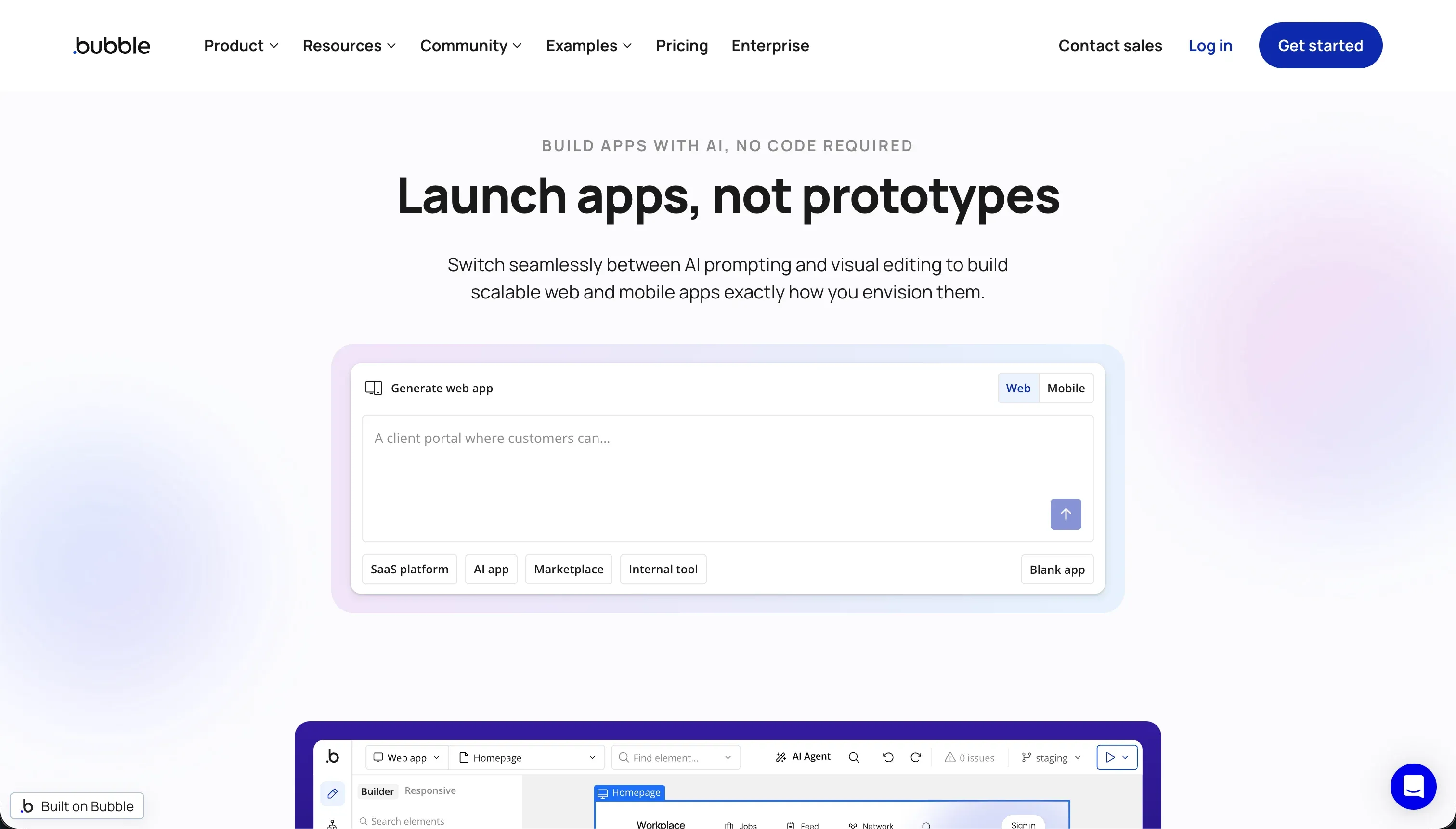 Bubble homepage snapshot
Bubble has been powering full-stack web applications for years, offering visual database queries and multi-step custom workflows that make validation of booking slots highly reliable. With server-side privacy rules, you can ensure that customers only view their own appointments.
But the proprietary visual architecture comes with a steep learning curve. Additionally, inefficient workflows or database queries can cause Workload Unit (WU) consumption to spike, resulting in highly volatile monthly bills. Pick Bubble when your application’s booking logic is too intertwined to be handled by simpler layout platforms. Full review.
4. Bolt - rapid layout scaffolding with clean code exports
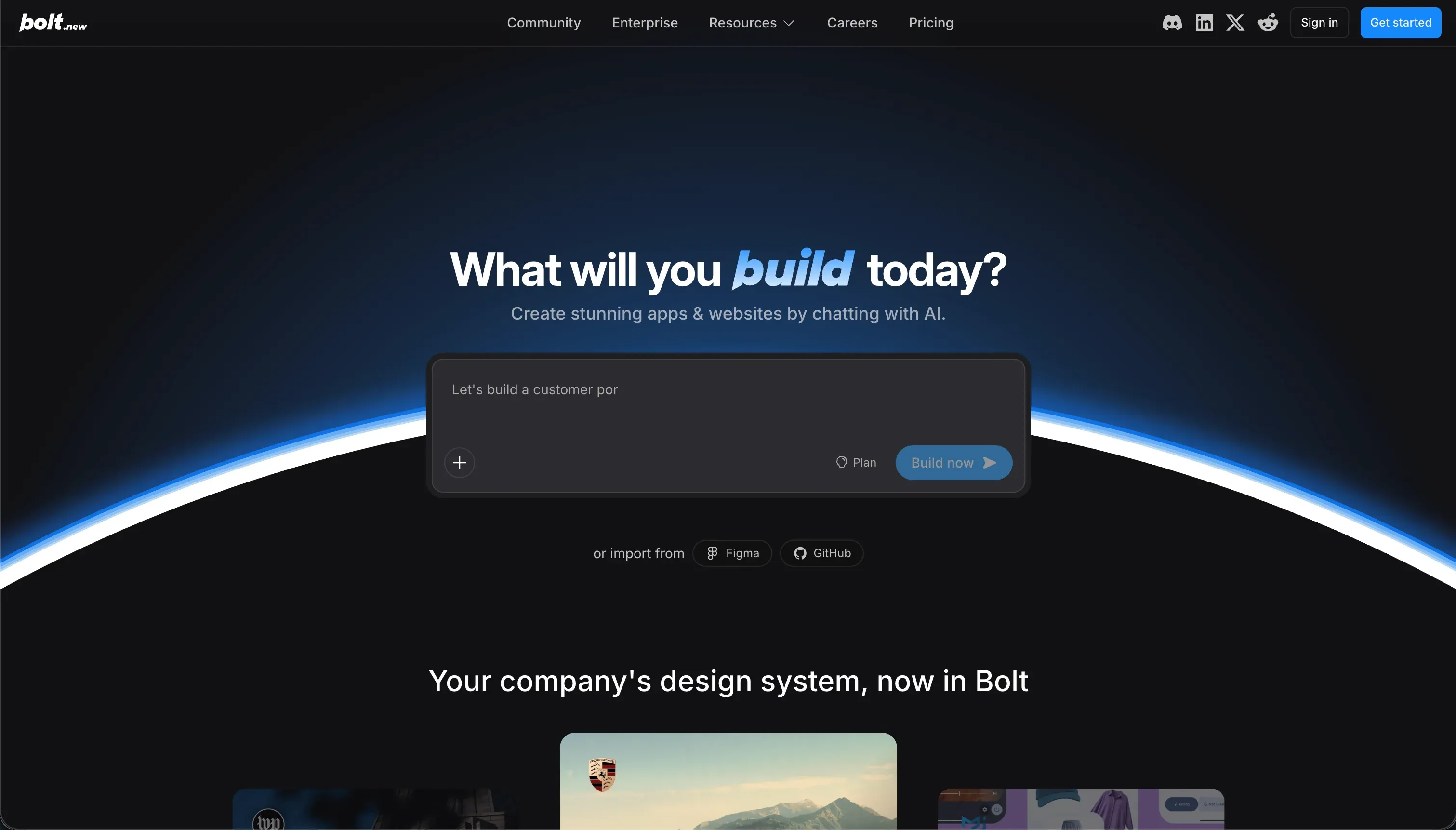 Bolt homepage snapshot
Bolt uses browser-based WebContainers to spin up full-stack templates from simple text prompts. Initiating a scheduling interface with React Calendars, Node.js routers, and PostgreSQL schemas is incredibly fast. Plus, you can export the codebase directly to GitHub.
Yet, for non-developers, Bolt’s prompt edit loops can consume tokens rapidly when trying to fix minor bugs. Because it lacks a native visual database manager, you are left to configure Row Level Security (RLS) rules and Supabase integrations via natural language prompts, which can lead to silent security risks if not audited. Full review.
5. Lovable - gorgeous frontend prototypes with backend security trade-offs
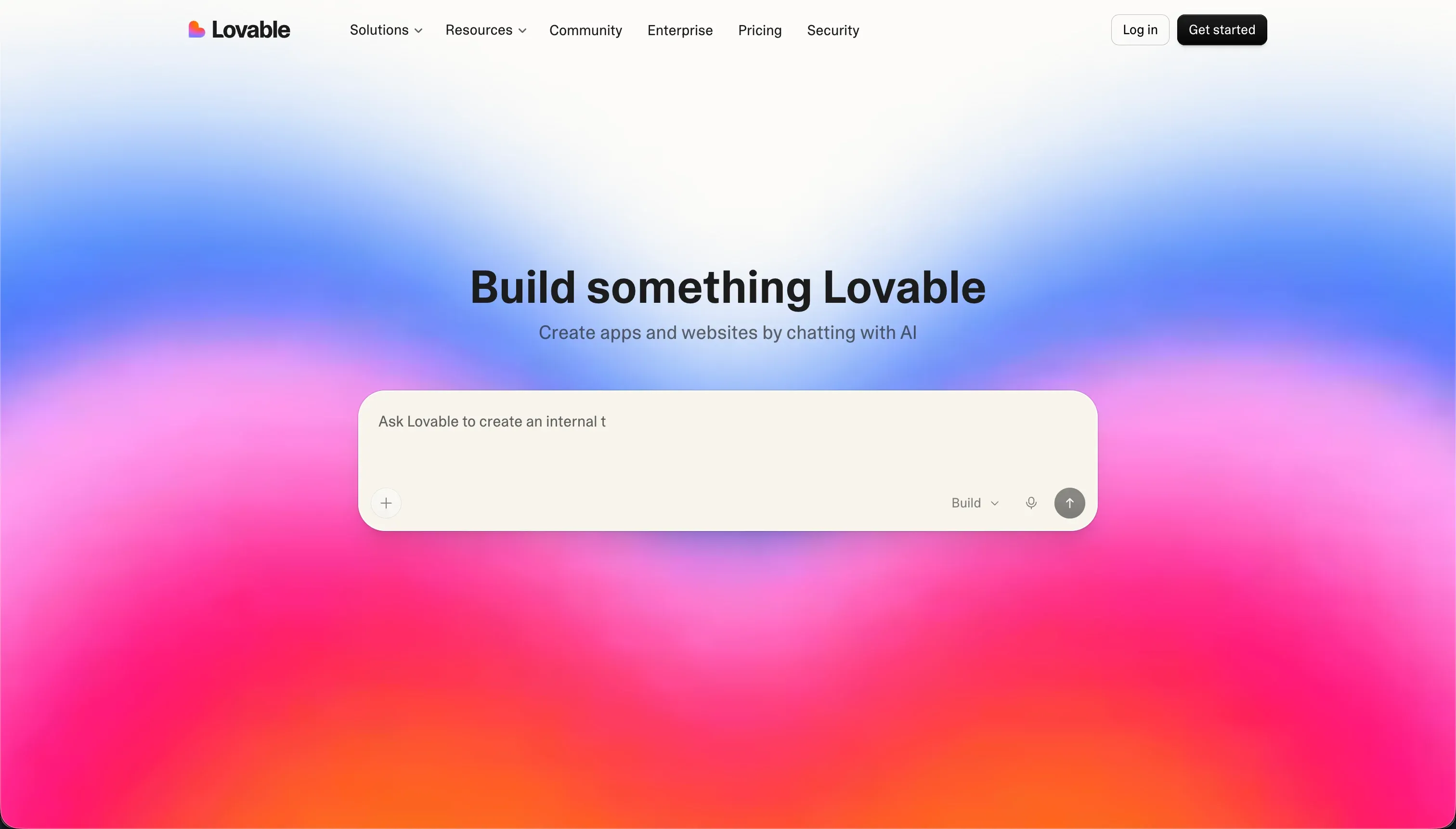 Lovable homepage snapshot
Lovable transforms your prompts into beautiful React schedules paired with a Supabase database. It is outstanding for creating client-facing booking prototypes that feel snappy and look high-end.
The trade-off comes when taking the scheduling app into live production. Long-term builders report that allowing AI to design database schemas creates schema debt, making it difficult to alter slot allocations or add billing workflows later without breaking existing code. Furthermore, iterating on minor layout bugs can deplete your monthly AI tokens quickly. Full review.
Also tried: the tools that didn’t make the cut
We also took a close look at a few other alternatives for scheduling workflows. Base44 combines hosting, database, and auth in a conversational prompt environment, but server instability and credit consumption during bug loops kept it off our ranked list. Meanwhile, WeWeb is a capable decoupled frontend editor, but the setup complexity of linking external backend databases like Xano or Supabase is overkill for most booking systems.
How to pick your booking app builder
The decision hierarchy for a booking builder depends entirely on who will manage the calendar logic long term. Who is responsible if a double-booking or timezone mismatch occurs?
| Your situation | Build on |
|---|---|
| Non-technical team managing client scheduling | Softr - platform-level calendars are secure and easy to update visually |
| Standard app with highly nested appointment routing | Bubble - powerful database query rules, but expect a learning curve |
| Software engineers wanting full backend control | Replit - write custom booking APIs and export clean system code |
Before launching any booking system, always run this critical test: book three sessions in different timezones simultaneously. It takes five minutes, and it ensures your scheduling engine won’t lose you customers on launch day.