


Free is the most misread word in vibe coding. Almost every tool has a free tier, but the real question is how far it gets you before a credit meter or a hard wall stops the build. This ranking is about what you can actually finish for nothing, and an honest read on where each tool starts charging.
For what to build with free tools, see personal projects.
When evaluating what can genuinely be built for zero dollars, we filtered the noise and ranked these tools based on structural reality. We looked at daily token caps, dynamic public vs. private repo structural gates, and limits that cut your session mid-task. Our ranking values resilience and builder headway over flashiness - what you can actually ship and maintain before the credit meter forces an expensive upgrade.
1. Replit - generous autonomous agent sandbox with dynamic limits
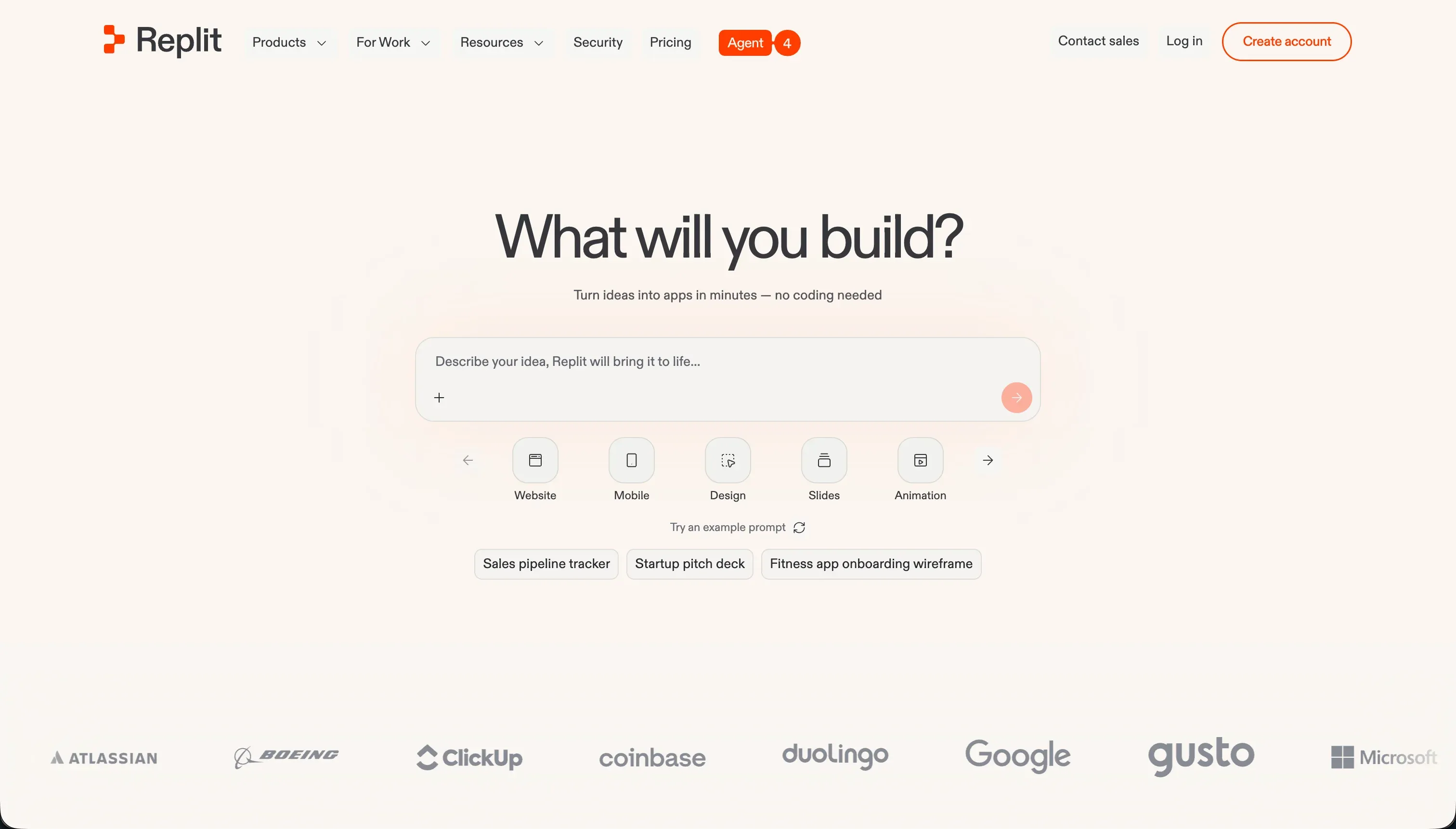 Replit homepage snapshot
Replit remains a top-tier environment for free-tier builders because of its execution path. The Starter plan costs $0 and grants developers access to dynamic daily credits to fuel Replit Agent, alongside a solid built-in database layer. On the free plan, you can publish up to one public project directly onto virtual containers with instant-on global URLs, making it a strong fit for testing, learning, and sharing early concepts.
However, the constraints are clear: you are limited to a single public project, and your assets live in a public sandbox. If you push the AI into complex debugging loops, you will watch it generate circular bug loops that aggressively consume those daily credit allocations. It is ranked first because its autonomous workspace, multi-language engine, and built-in Postgres database layer give you a complete, deployable stack for nothing. Full review.
2. Softr - predictable visual building with flat user limits
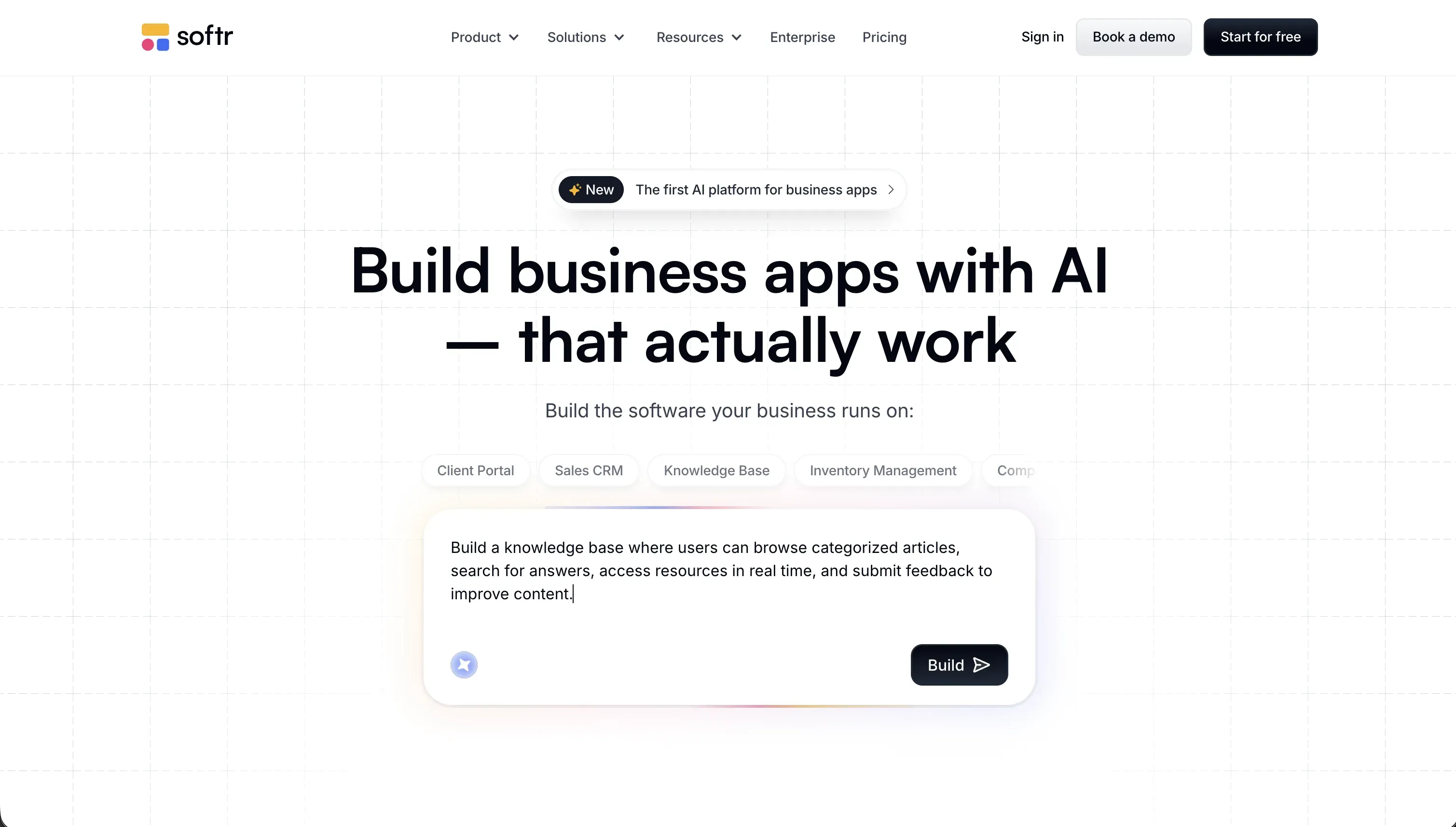 Softr homepage snapshot
Softr stands out in the free-tier landscape by refusing to charge you for iteration. The platform’s Starter plan is completely free and includes up to 10 app users, 5,000 database records, and access to Softr Databases. Because Softr relies on structured, visual app building instead of AI-generated code, you do not have to police a credit meter or worry about prompt caps halting your work mid-edit.
For business-focused creators building client portals, directories, or team dashboards, this free plan provides a stable foundation. You get secure authentication, role-based page visibility, and responsive layouts out of the box. While you are limited in user count, your application remains fully functional and will not break from code updates. It is ranked second because it offers the most reliable path to a real, deployable business app without risking credit exhaustion. Full review.
3. Bolt - full node.js webcontainers with a high token runway
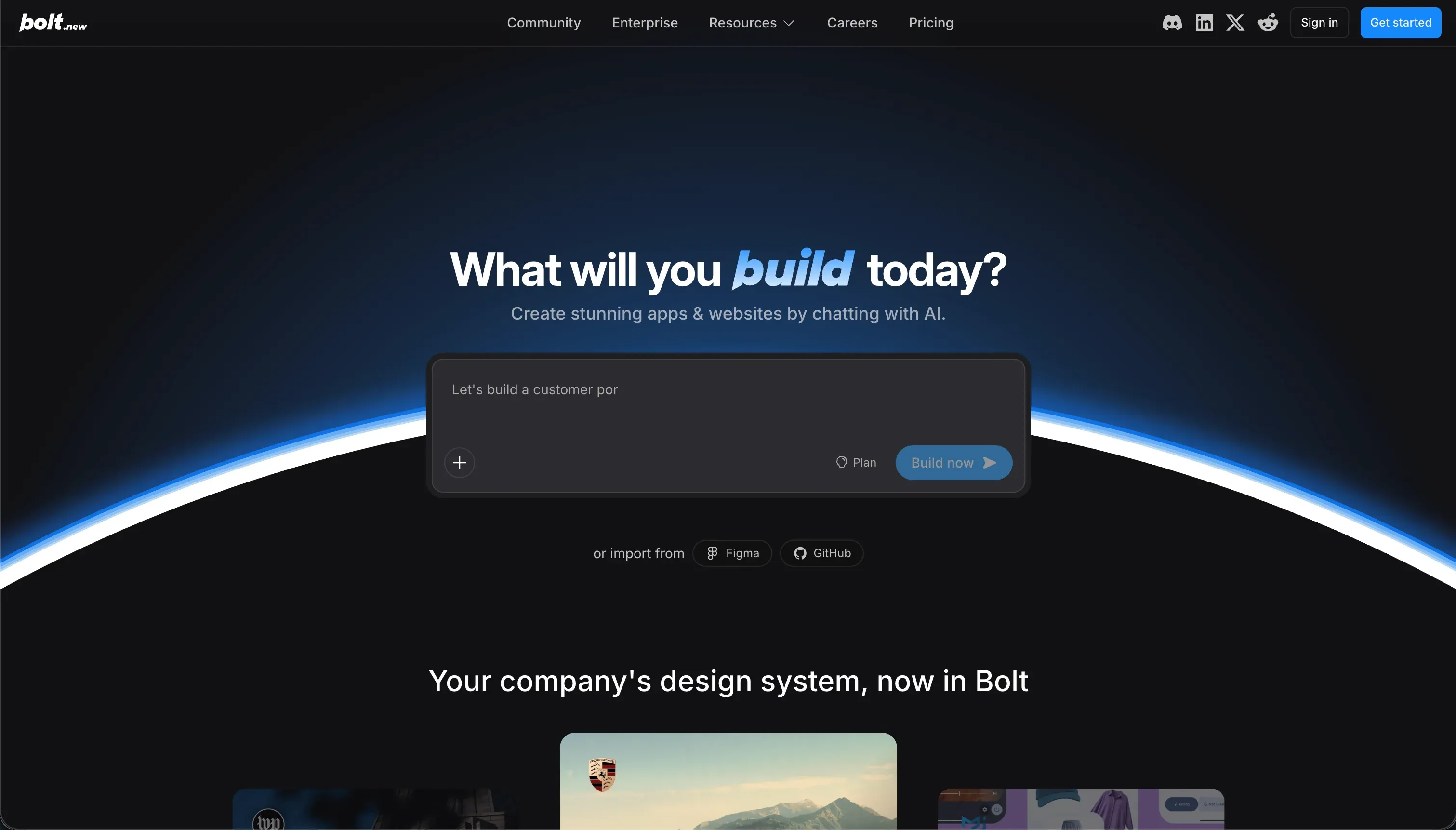 Bolt homepage snapshot
Bolt.new took browser-native development further than most by running complete Node.js architectures directly inside your browser’s WebContainers. The free tier gives you a generous 1 million tokens per month backed by a 150K daily cap, translating to a substantial code scaffolding runway. Because it works visually, you can watch the AI orchestrate React pages, configure background logic, and output deployment files on the fly.
The catch is that the free tier only supports public projects, and the browser container can occasionally trigger Out of Memory (OOM) crashes on larger assets. More crucially, if you fall into token-burning edit loops trying to resolve styling details, you can deplete your daily cap quickly, halting development until tomorrow. Because it spits out clean, downloadable Vite/React codebases with zero vendor lock-in, it stands as an exceptional playground for developers. Full review.
4. v0 - the ultimate free visual design mode and react sandbox
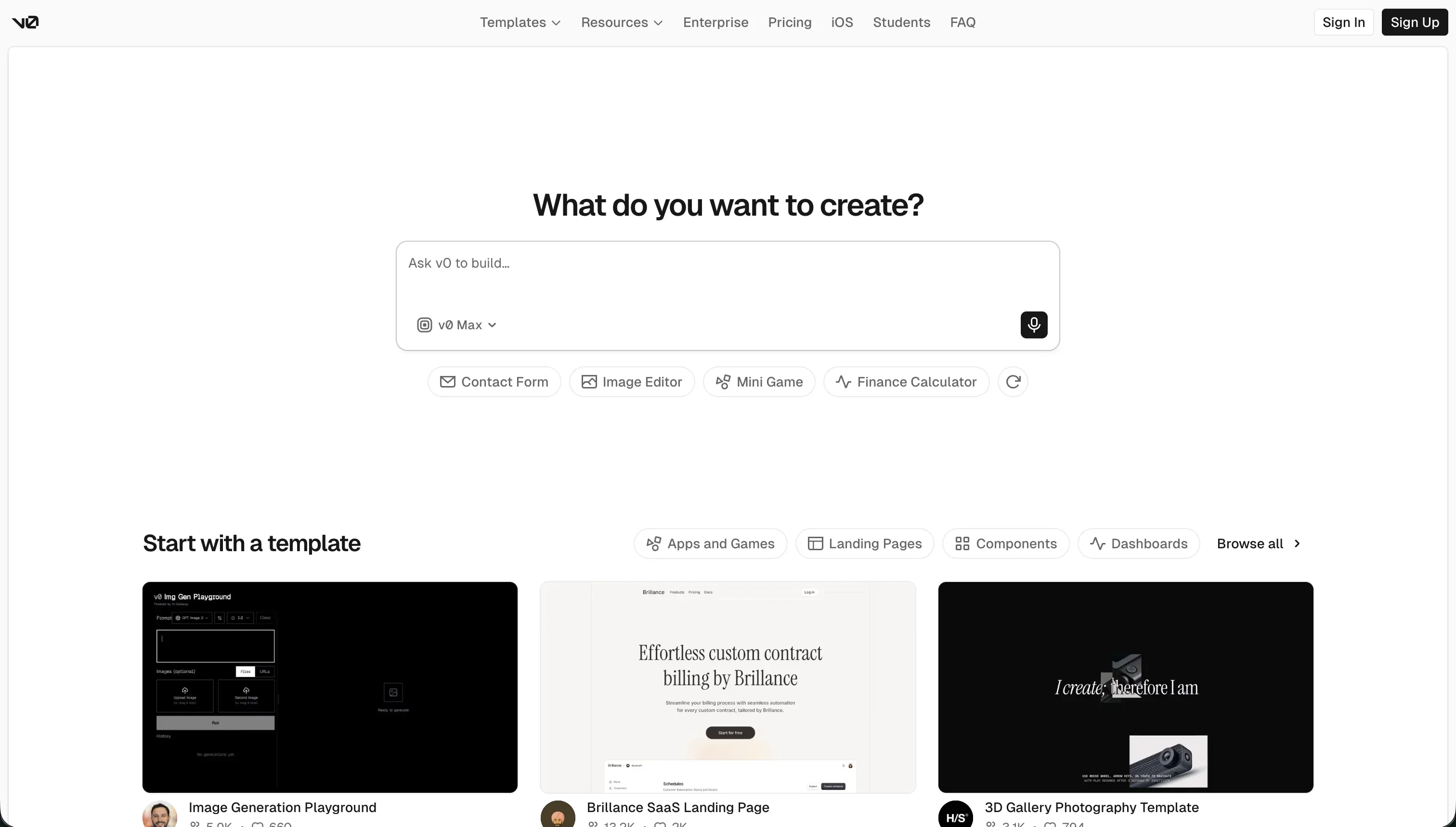 v0 homepage snapshot
v0 by Vercel excels at translating screenshots, sketches, or plain-text ideas into highly polished layout structures using Tailwind CSS and React. The free plan grants you $5 in monthly credits, which renews automatically, alongside a strict limit of 7 messages per day. For design mockups, visual prototyping, and scaffolding frontend interfaces, this sandbox is highly productive.
Yet, v0 is strictly frontend-only. It lacks a native database, user management, or direct execution layer, meaning developers must manually export the code and wire it up to an external backend like Supabase. Additionally, code generation quality can degrade past the fifth conversational message, requiring builders to clean up the output manually. It is ranked third because it is a design scratchpad, not a platform, but as a frontend builder, it remains unmatched. Full review.
5. Dyad - open-source local development with zero subscription markup
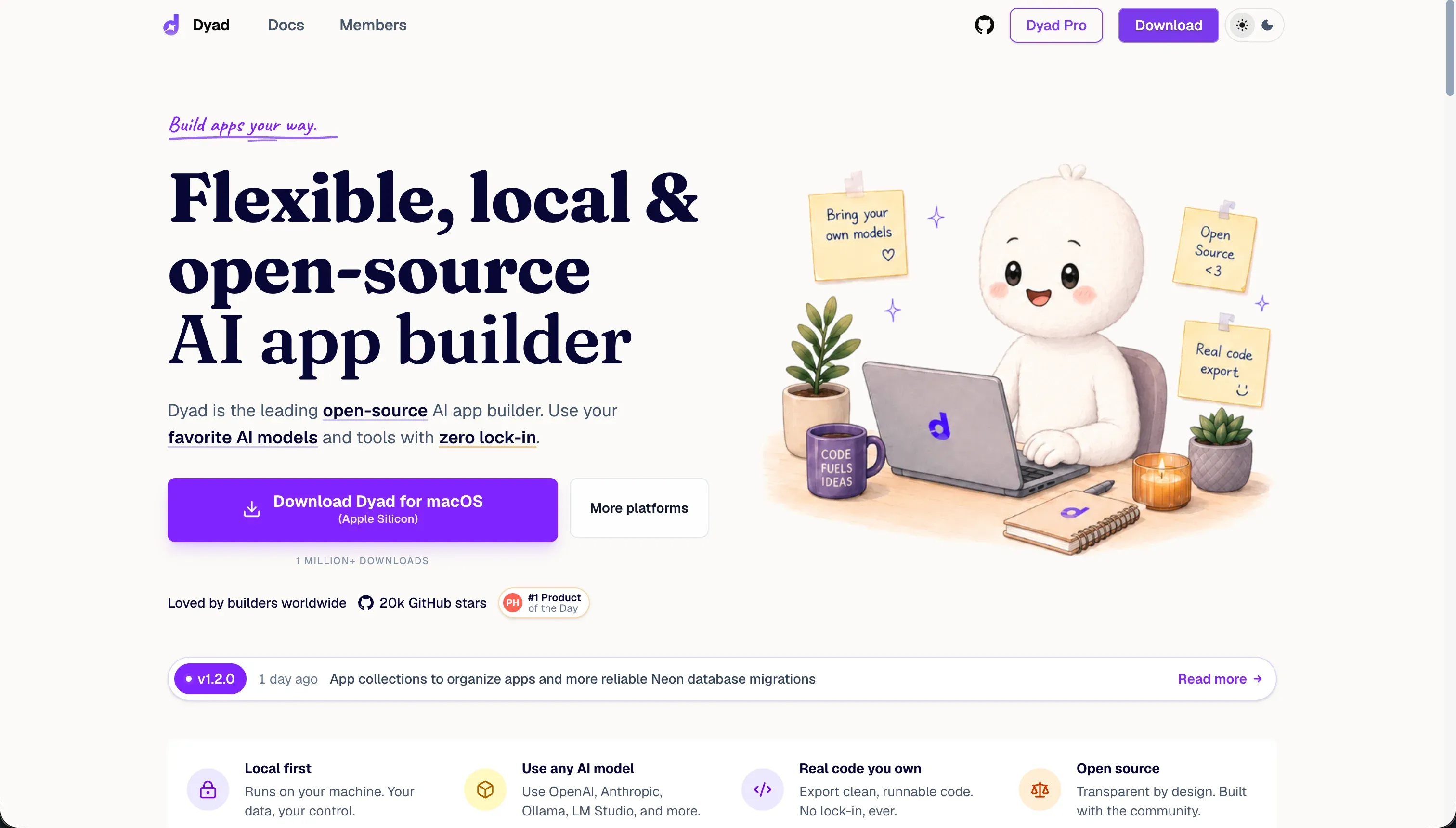 Dyad homepage snapshot
Dyad offers a refreshing escape from the typical cloud credit traps. The Community plan is completely free, open-source, and runs on macOS, Windows, and Linux. It allows for unlimited local app generation and integrates with local AI models like Ollama, or lets you Bring Your Own Key (BYOK) to interface with models like GPT-4 or Claude Sonnet directly. By bypassing subscription markups, you only pay raw token costs to API providers.
The trade-off here is setup complexity. Because Dyad compiles and runs resources locally on your hard drive, non-technical users might struggle with Node.js and Git terminal dependencies, and running powerful local models requires high-end Apple Silicon or NVIDIA GPUs. Furthermore, launching your app publicly requires setting up your own hosting, as there is no one-click cloud publish tool. It is the best option here for developers prioritizing control. Full review.
6. Lovable - high-polish full-stack builder with a highly restricted gateway
 Lovable homepage snapshot
Lovable is a premier generator of highly aesthetic, fully relational React and Supabase applications. The visual quality of the applications it builds is a real strength, and the free tier allows you to test the waters with 5 daily credits (up to 50 per month) on public projects with complete GitHub synchronization.
While the code generated is clean React and TypeScript, we ranked Lovable fifth because its free tier is highly restrictive and functions primarily as a starting point. Building a practical database schema and configuring basic authentication can consume your entire daily credit pool in just a few prompts. If you hit a regression loop where the AI introduces bugs while trying to fix a styling detail, development will halt. It earns its keep for visual demos, but the free plan cannot support deep development. Full review.
Also tried: the tools that didn’t make the cut
We also thoroughly evaluated Base44, which offers a free plan featuring 25 message credits per month, though users report bug regressions and recurring server instability, with some saying the platform goes down almost weekly. Similarly, Anything offers up to 20 projects on its free visual canvas, but we did not include it in our ranked roster due to ongoing platform migration instability following their recent brand transition, where old sites became read-only, posing an operational risk.
How to pick your free builder tier
When selecting a free platform to host your build, focus your decision on code ownership and resource limitations rather than the initial demo speed. How much environment setup and credit policing are you willing to do?
| Your situation | Build on |
|---|---|
| You want a full browser IDE with dynamic credits | Replit |
| You want clean, exportable react code templates | Bolt |
| You want local privacy & unlimited builds (BYOK) | Dyad |
| You need beautiful interfaces and frontend mockups | v0 |
As a strict rule of thumb: do not pick a highly restricted cloud-based constructor if you intend to run several visual iteration runs. If your workflow requires tweaking buttons, adjusting margins, and micro-managing styles, choose local engines like Dyad or platforms that export code cleanly, ensuring style edits do not drain your daily credit limits.