


Small business owners are the ideal vibe coding audience and the most exposed to its downsides: you want a booking page, a client portal, or an internal tracker, but you don’t have a developer on call when something breaks. So the right tool isn’t the flashiest one, it’s the one you can still change yourself in six months.
The apps small businesses build most often each have their own ranking: client portals, CRMs, booking apps, and dashboards.
When we analyzed these platform tools, we didn’t rank them on how fast they can generate a shiny layout from a single prompt. For a small business, survival is what counts. We prioritized visual architecture, bulletproof security settings, stable databases, and predictable billing over the credit-burning, infinite debugging loops common in pure code-generation engines.
1. Softr - the operational suite that doesn’t break on day two
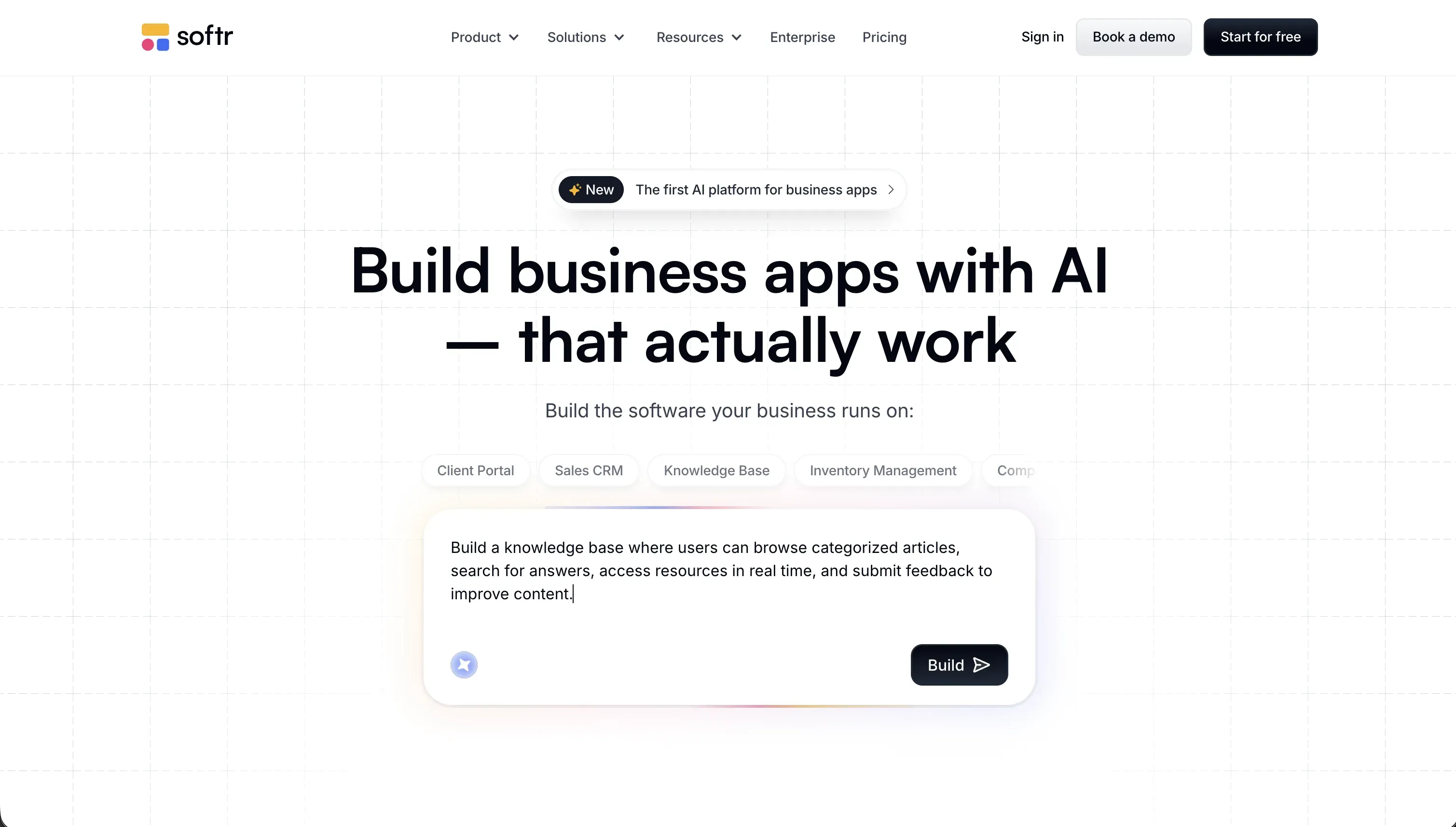 Softr homepage snapshot
Whether you are a small business owner or an IT team in a large enterprise, the biggest threat of vibe coding is the day-two realization that you cannot easily update your app. Softr completely bypasses this issue by providing battle-tested visual blocks alongside its AI Co-Builder. The database structure, user authentication, and granular visibility roles are handled directly by the platform, meaning there is no raw generated code to crash or debug if a minor setting changes. For larger organizations, IT departments actively deploy it to let different business teams safely build custom tools, replace spreadsheets, and digitalize workflows in a governed environment without shadow IT risks.
We love how easily we could generate an internal tracker with the Co-Builder and then tweak the color theme and visibility settings manually in the studio without burning a single credit. It integrates natively with Airtable, Google Sheets, and its own high-performance databases, giving non-technical builders complete structural confidence. Your operational software stays fast, secure, and fully editable without developer handoffs. Full review.
2. Replit - the code-first sandbox with full developer control
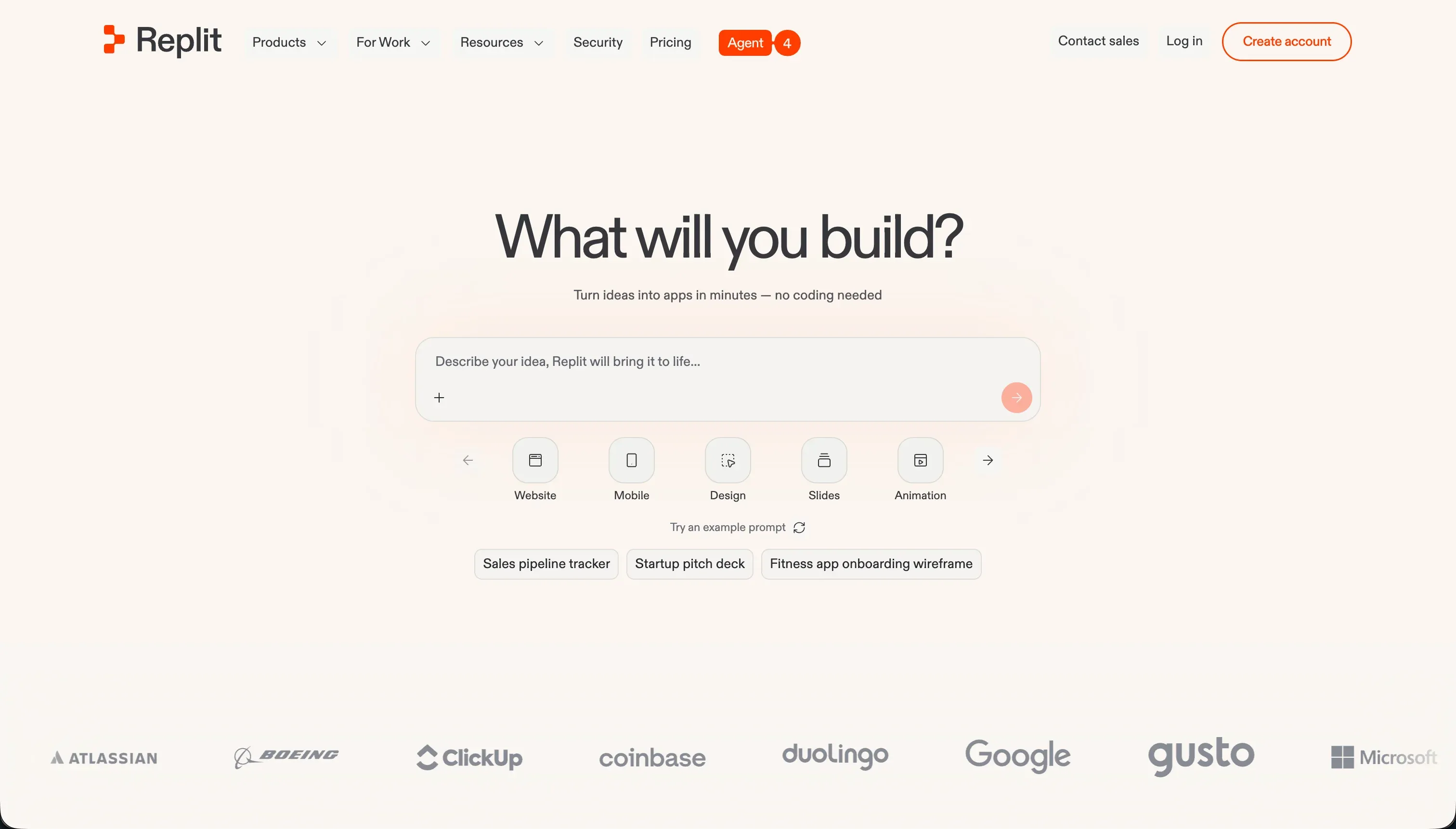 Replit homepage snapshot
If your business requires a highly customized app that eventually needs to migrate to its own servers, Replit is the strongest code-first choice. The Replit Agent autonomously scaffolds folders, writes logic, and deploys containers from plain language prompts. It provides a real cloud-based IDE, a built-in PostgreSQL manager, and automated testing feedback.
However, it ranks below Softr because the output of the agent is real code that your team must ultimately maintain, and there is a high risk of getting caught in automated bug-generation loops. If you do not have some baseline technical knowledge to debug container configurations or manage environment secrets, you will quickly hit an iteration wall. It is an amazing learning and prototyping environment, but it places the infrastructure burden squarely back on your shoulders. Full review.
3. Bubble - a deep logic builder that scales on your terms
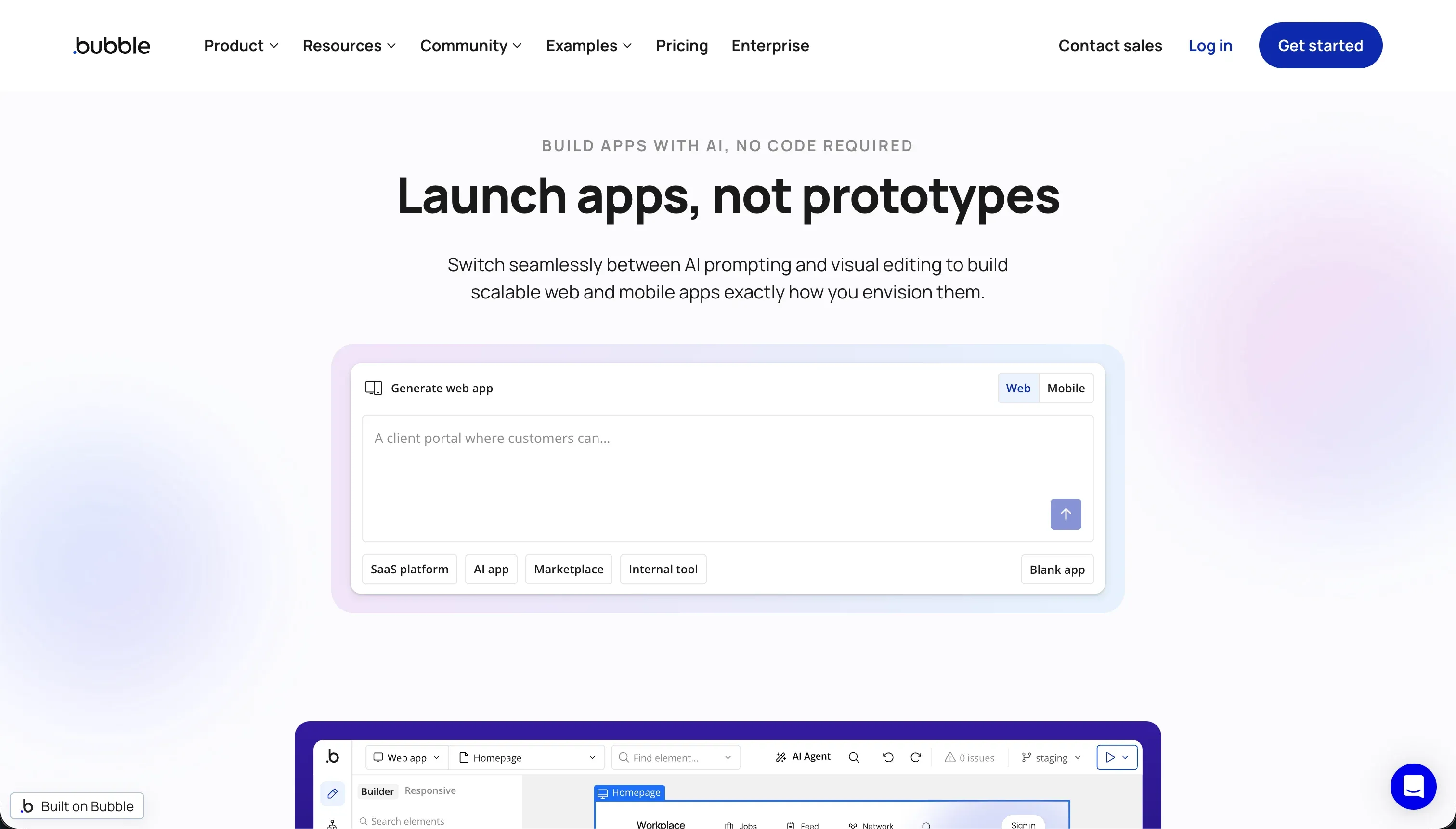 Bubble homepage snapshot
Bubble is the grandpa of visual application builders, offering an extraordinarily deep visual programming language instead of raw code generation. It handles user permissions, complex multi-step database actions, and third-party API integrations through visual logic modules rather than raw code. This avoids the fragility of vibe-coded solutions while offering massive plugin support.
We kept it at rank three because of its steep learning curve and its pricing model. Unlike simple vibe editors, Bubble requires hours of dedicated study to master responsive layout controls and server-side privacy rules. Furthermore, its workload-unit (WU) billing can cause software costs to expand quickly if database queries are unoptimized. Pick Bubble only if your business app has highly unique operational rules that simpler platforms cannot support. Full review.
4. WeWeb - frontend visual logic for decoupled data layers
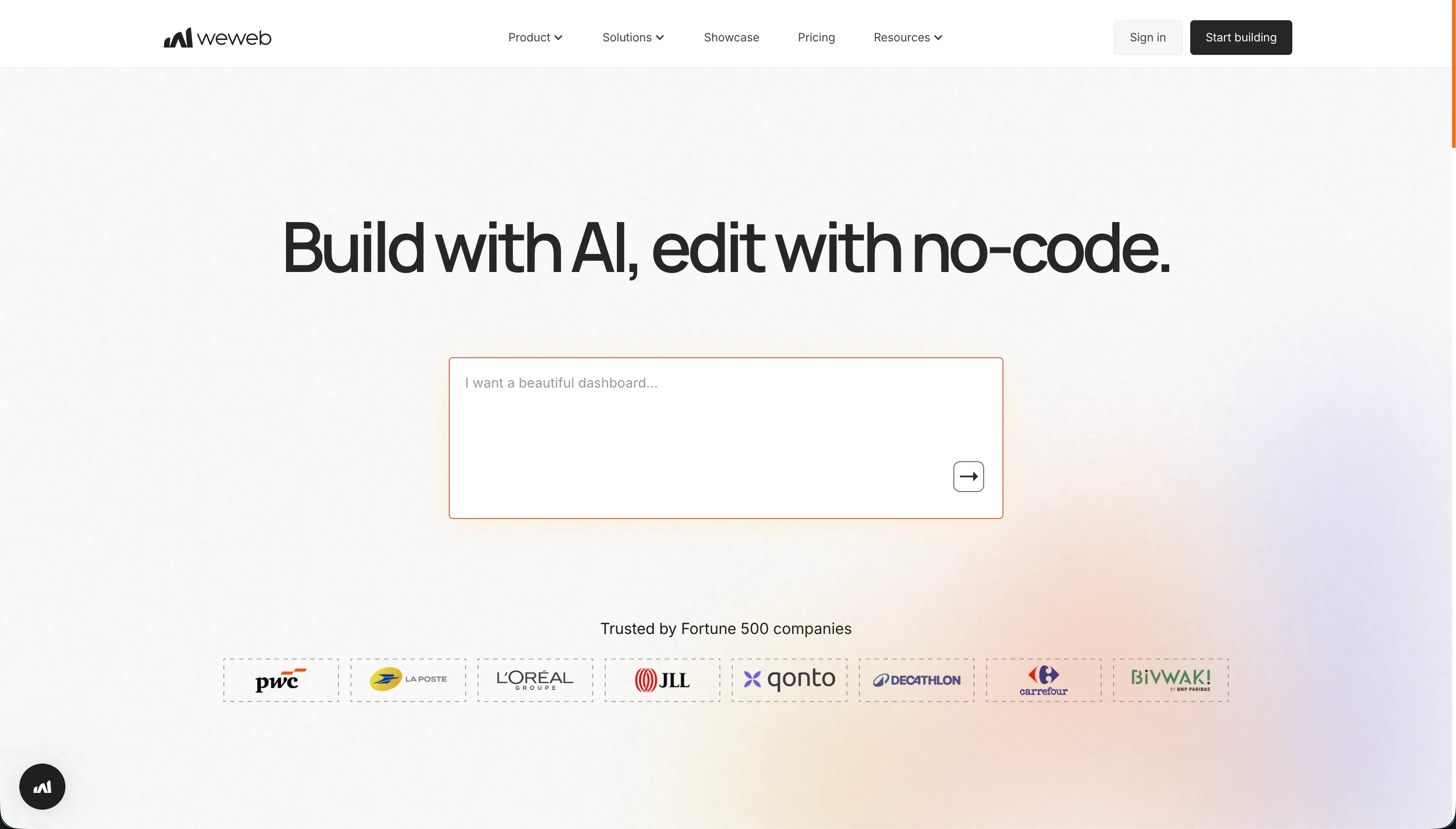 WeWeb homepage snapshot
WeWeb is a masterclass in visual frontend design, built on a decoupled architecture. It lets you create complex interfaces with custom CSS sizing, flexbox placement, and visual state management, while fetching data from external backends like Xano, Supabase, or Airtable.
For most small business owners, this creates a high setup complexity that requires multiple platform subscriptions. Because WeWeb has no native database, you must architect the backend elsewhere, which requires an intermediate understanding of REST APIs and query payloads. It is a brilliant, professional package for frontend development, but too heavy of a stack for simple, single-operator tools. Full review.
5. Lovable - beautiful full-stack prototypes with high maintenance debt
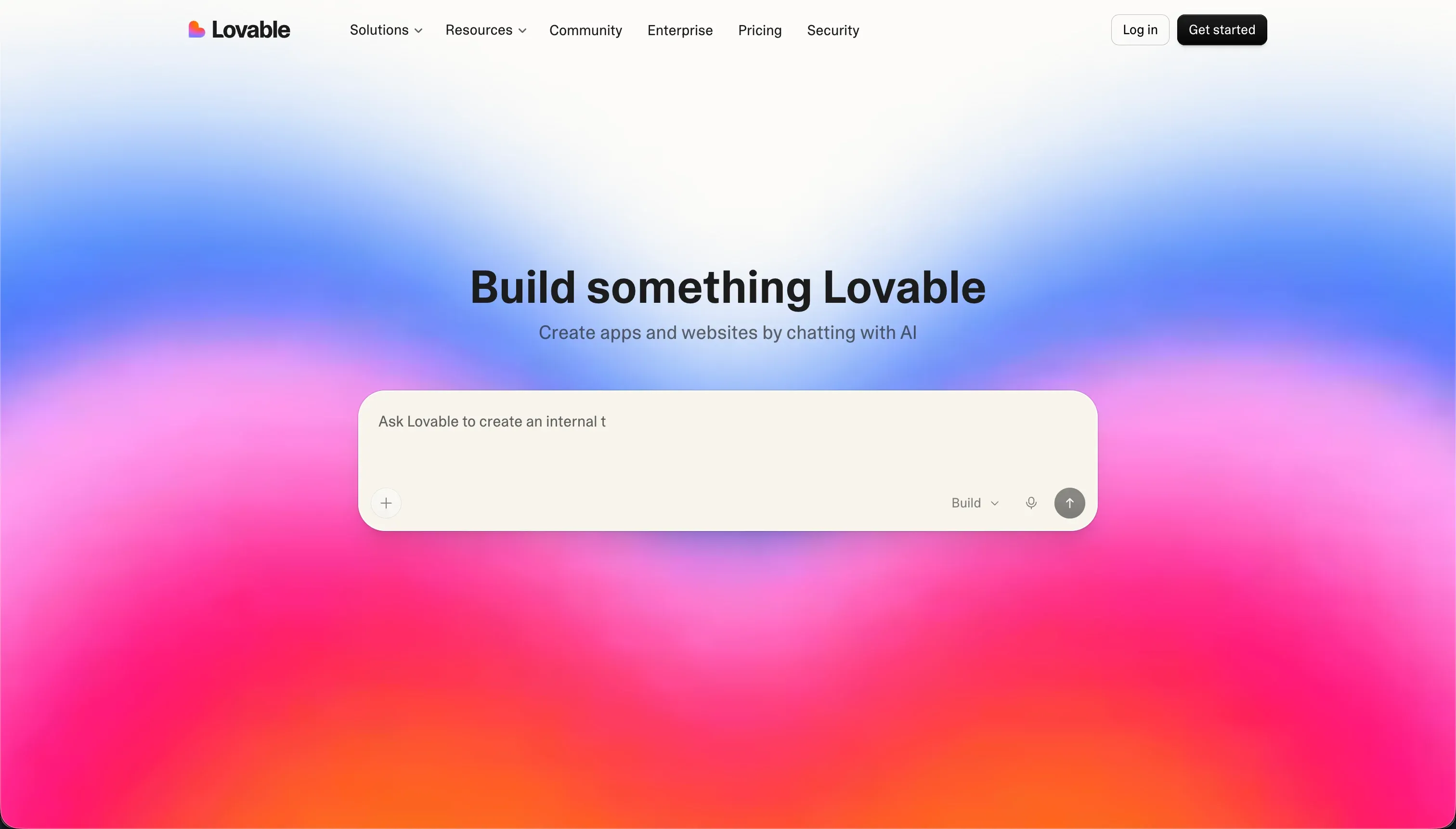 Lovable homepage snapshot
Lovable transforms plain description prompts into standard React and Supabase code faster than almost anything else. It is excellent for generating interactive, visual prototypes, mockups, and single-page landing pages that look highly polished from your very first prompt.
We rank it fifth because building production business tools with it introduces high security and maintenance risks. User authentication, database linkages, and row-level security (RLS) policies are managed via AI prompts, which regularly introduces data isolation vulnerabilities that an amateur builder cannot audit. Additionally, community reports highlight that minor updates can cause code regressions, resulting in recurring bugs that drain monthly credits just to restore baseline functionality. Full review.
Also tried: the tools that didn’t make the cut
We also looked closely at a few other tools. Base44 offers an interesting prompt-driven workspace that bundles PostgreSQL, but builders often experience severe instability during platform revisions and complain about quick credit drain during automated regression cycles. For internal trackers that need deep SQL connectivity, Retool has a brilliant backend component library, but its high visual programming barrier and steep per-seat pricing make it expensive and developer-centric. Meanwhile, Zite is a fast, AI-first entry with a simple table layout, but it lacks the visual granularity and established performance records of our ranked platforms.
How to pick your business app builder
The right choice comes down to one fundamental paradigm: Who is going to maintain this application when a business configuration changes?
| Your situation | Build on |
|---|---|
| You want a secure, stable app with no code debt | Softr |
| You want to build custom features on a proprietary platform | Bubble |
| You want true code ownership and have a technical helper | Replit |
| You want an agency frontend connected page-by-page | WeWeb |
Here is our golden rule of thumb for small businesses: do not entrust your core customer authentication and data privacy rules to a raw AI prompt model. Use a dedicated platform where the security rules are static features you can visually configure, and limit code-generation prompts to isolated custom UI blocks where a mistake won’t compromise your customer’s data.