


A SaaS MVP is a prototype that takes money, and that second part changes everything. The moment someone pays, you’ve promised them logins that work, data that’s correct, and an app that’s still alive next month. Demo speed, the metric every vibe coding tool markets on, stops being the point. What matters is whether the thing survives Day Two: real users, real edge cases, and the feature requests that start arriving with the first invoices.
That’s exactly where vibe-coded apps wobble. The pattern is well documented: AI generators optimize for the happy path, so you get a beautiful signup flow with no password reset, database permissions set broadly enough that the demo works, and a codebase that fights back when you try to change it. Roughly 45% of AI-generated code carries OWASP Top 10 vulnerabilities even when it compiles cleanly. In a prototype none of that matters, but it all lands the week your first customers do, which is the worst possible week. So this ranking weighs the whole arc, from first prompt to tenth paying user.
1. Replit - the complete code-first route
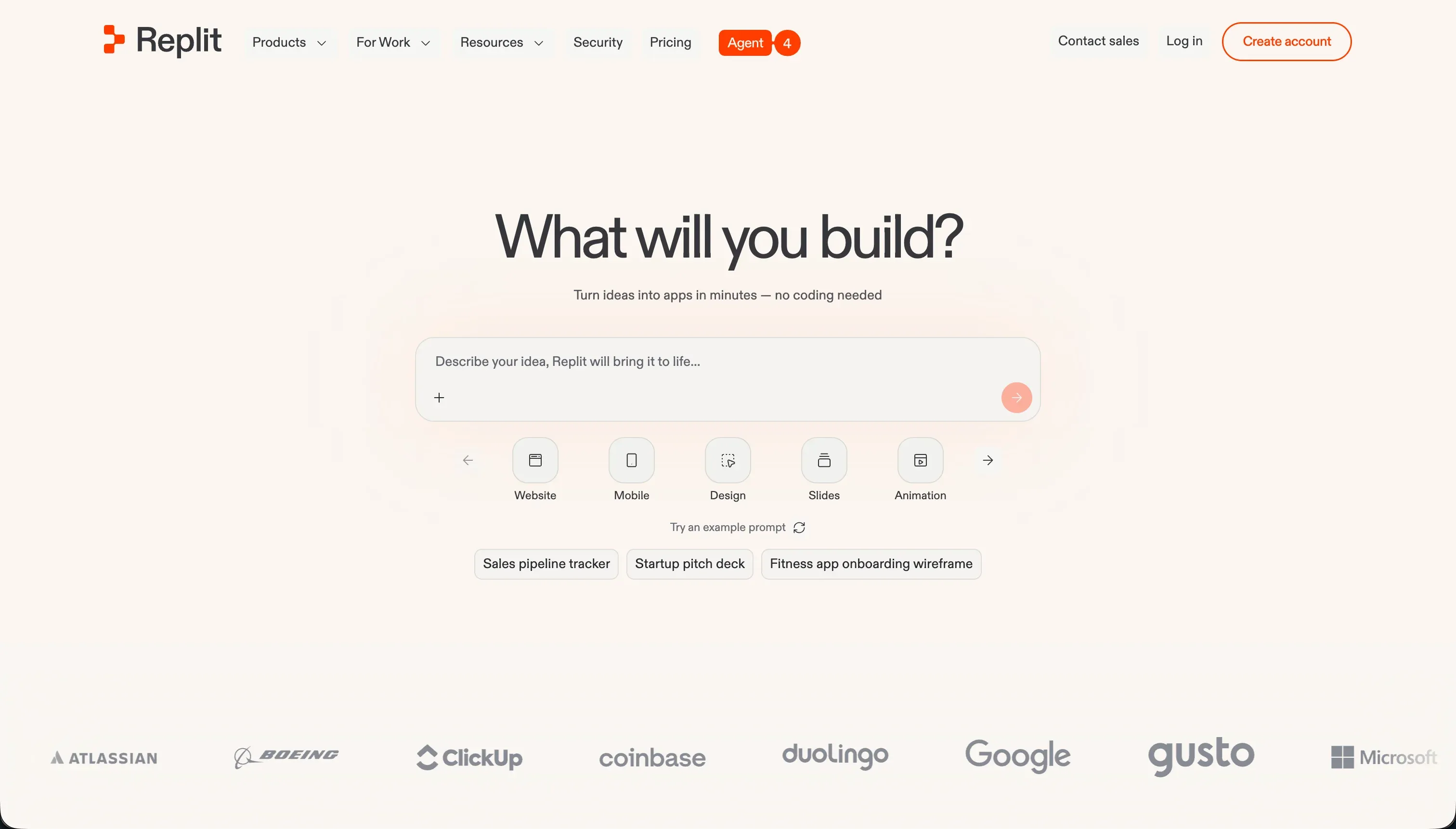 Replit homepage snapshot
If your MVP needs to be real software - custom logic, your own stack, code you could raise on - Replit is the strongest single place to build it. The Agent takes you from prompt to working app, and the platform supplies what every other code generator outsources: a SQL database, hosting with autoscaling, custom domains, and a full IDE with a terminal for the surgery every real product eventually needs.
We shipped a client-facing tool on it and the honest report is that it can carry you from idea to billable product without leaving the browser. The trade you’re making is ownership. Auth, security rules, and payments are implemented in code, by prompts or by hand, and they’re only as safe as your review of them. And watch the meter: effort-priced credits are fine for small tasks and dangerous in long debugging runs, with community overage stories running into hundreds of dollars in a day.
Pick Replit if you or a cofounder can read code, or you’re committed to learning, and the MVP genuinely needs custom behavior. Full review.
2. Lovable - the validation machine with a deferred bill
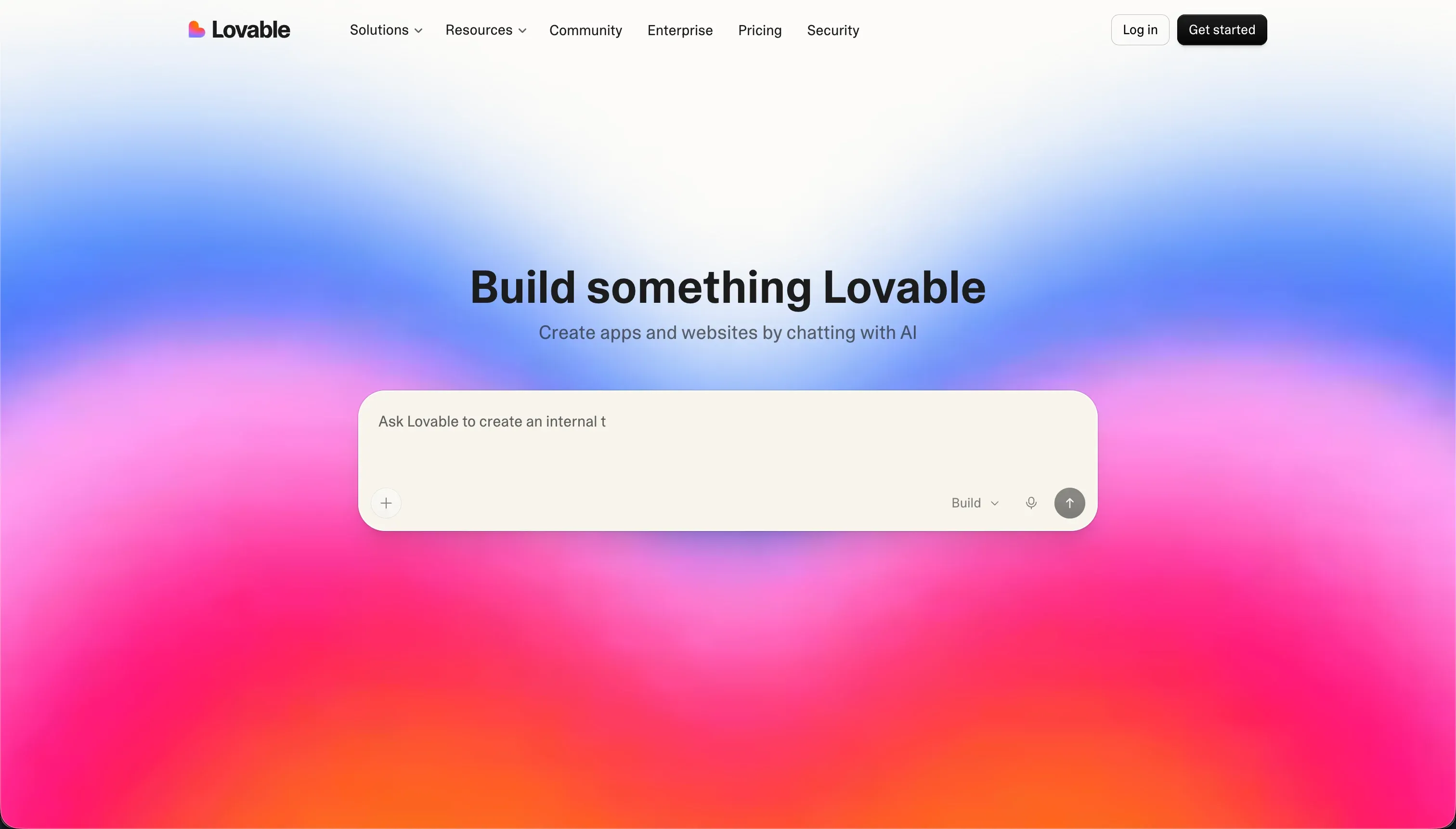 Lovable homepage snapshot
For testing whether anyone wants the thing at all, Lovable is brilliant. Prompt to polished full-stack prototype in an evening, Supabase backend included, looking good enough to put in front of investors. We use it exactly this way, and for that job it might be the best tool on the list.
Charging money on it is where we slow down. The auth and row-level security live in Supabase configuration the AI sets up and you must audit. Long-term builders report platform updates breaking live apps and AI-designed schemas accumulating “schema debt” that turns small changes into rebuilds within months, with experienced users advising against production apps meant to live past 18 to 24 months. Credits drain fastest exactly when you’re iterating on customer feedback, the core activity of an MVP.
Use Lovable to validate and to shape the design, then make a deliberate call about what your customers actually run on. Full review.
3. Bolt - scaffolding for founders who’ll own the stack
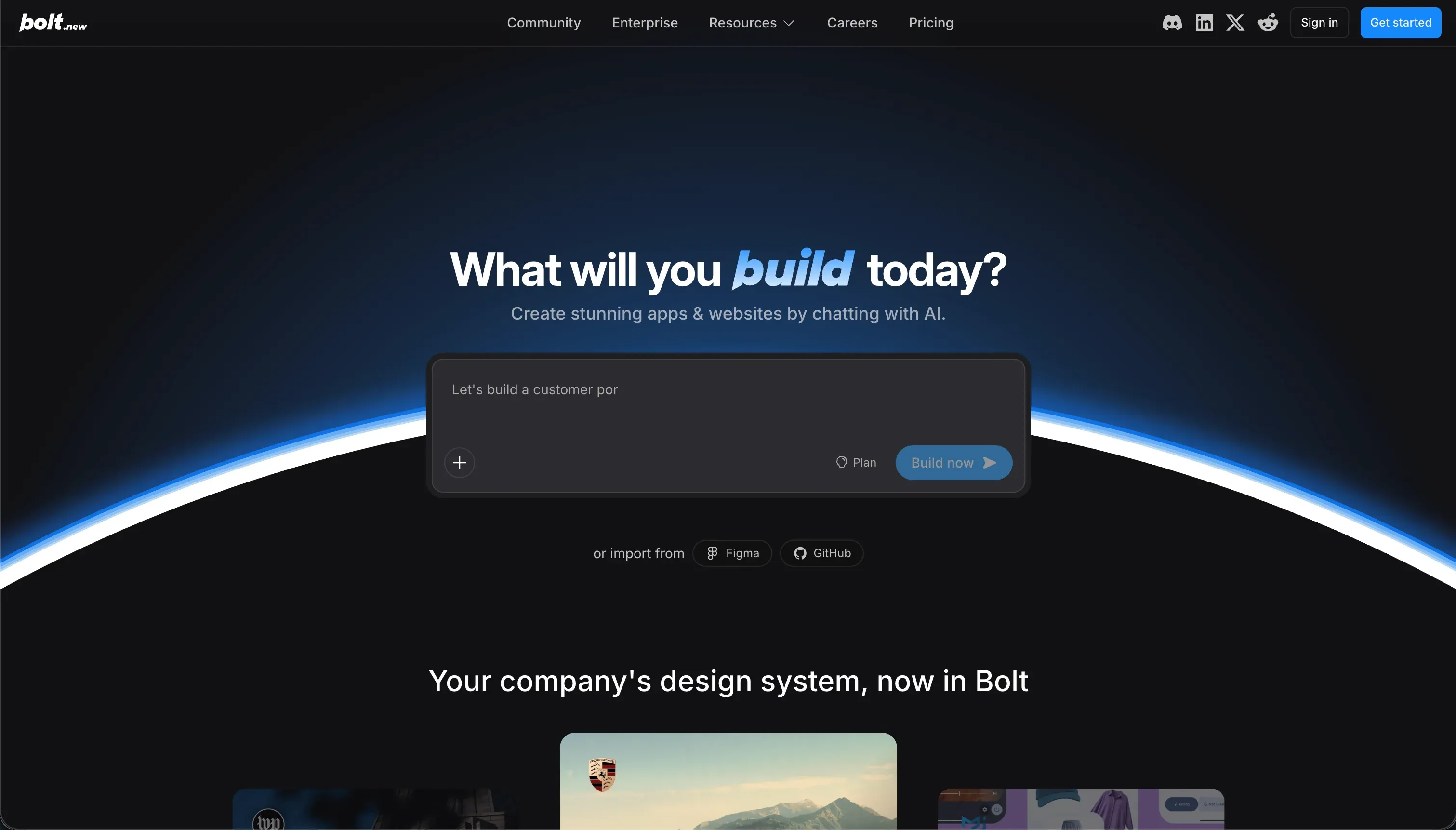 Bolt homepage snapshot
Bolt generates the app fast and hands you a real browser-based development environment with clean, exportable React code and no lock-in. For a technical founder who plans to wire up Supabase auth, configure security by hand, and graduate the codebase to their own infrastructure, that’s a genuinely sensible MVP path.
For a non-technical founder it’s the wrong default, because the gaps are MVP-shaped: no native database or auth layer, security rules prompted rather than visually configured, and token burn in edit loops that’s a recurring community complaint. Capable tool, but it assumes a developer is finishing the job. Full review.
4. Cursor - where the MVP grows up
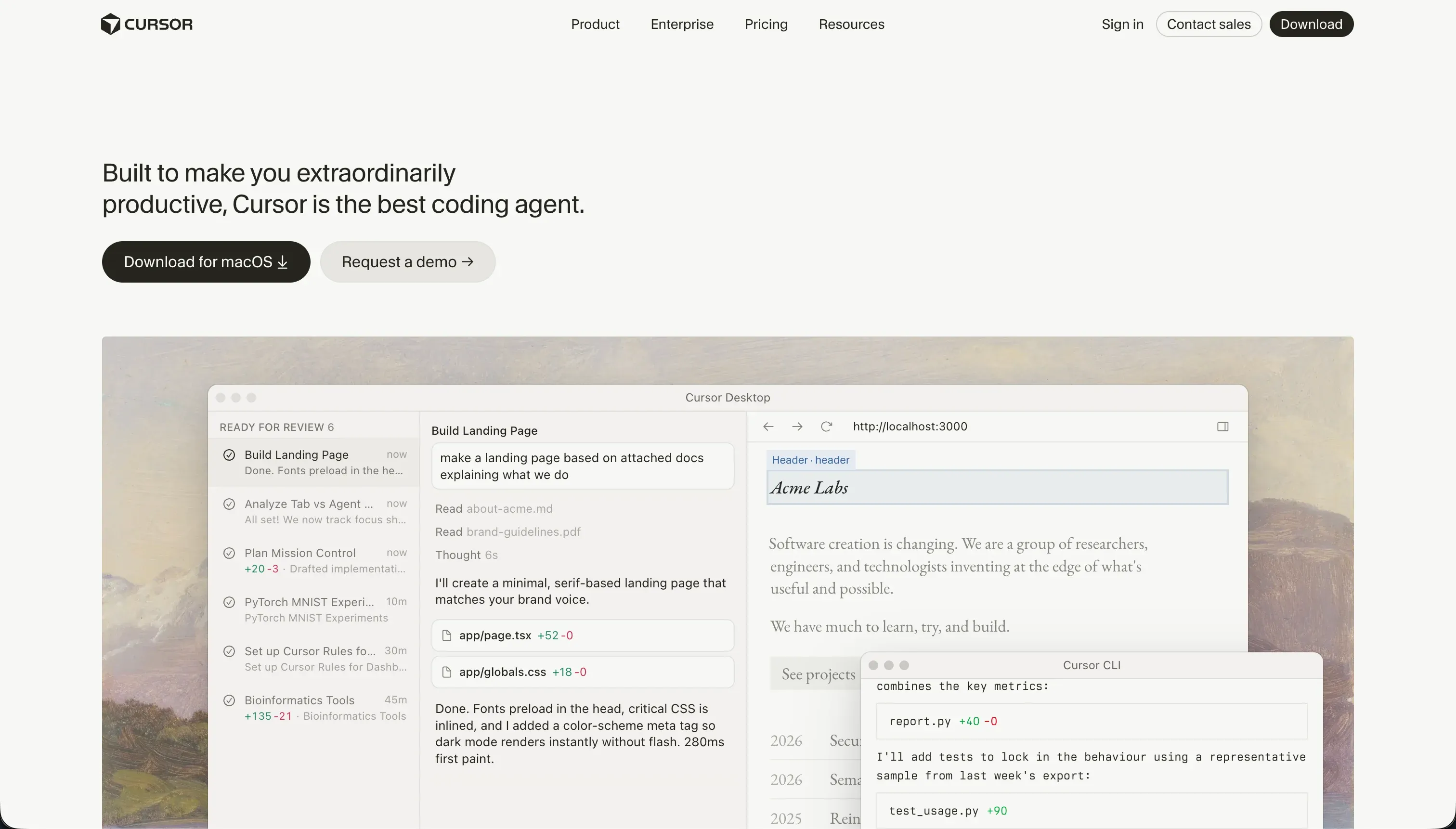 Cursor homepage snapshot
Cursor isn’t where most MVPs start, but it’s where the successful ones tend to end up. Once there’s real code worth maintaining, an AI-first editor with codebase-wide context is how you keep shipping fast, and the common pattern is prototyping in Lovable or Bolt, exporting, and continuing in Cursor.
It ranks here rather than higher because it’s an editor, not a platform: no hosting, no database, no auth scaffolding, and it assumes you can read what the agent writes. If your founding team codes, pairing Cursor with Replit-style infrastructure is arguably the strongest setup on this page. If nobody codes, this isn’t your entry point. Full review.
5. Codex - the Git-native agent for local repositories
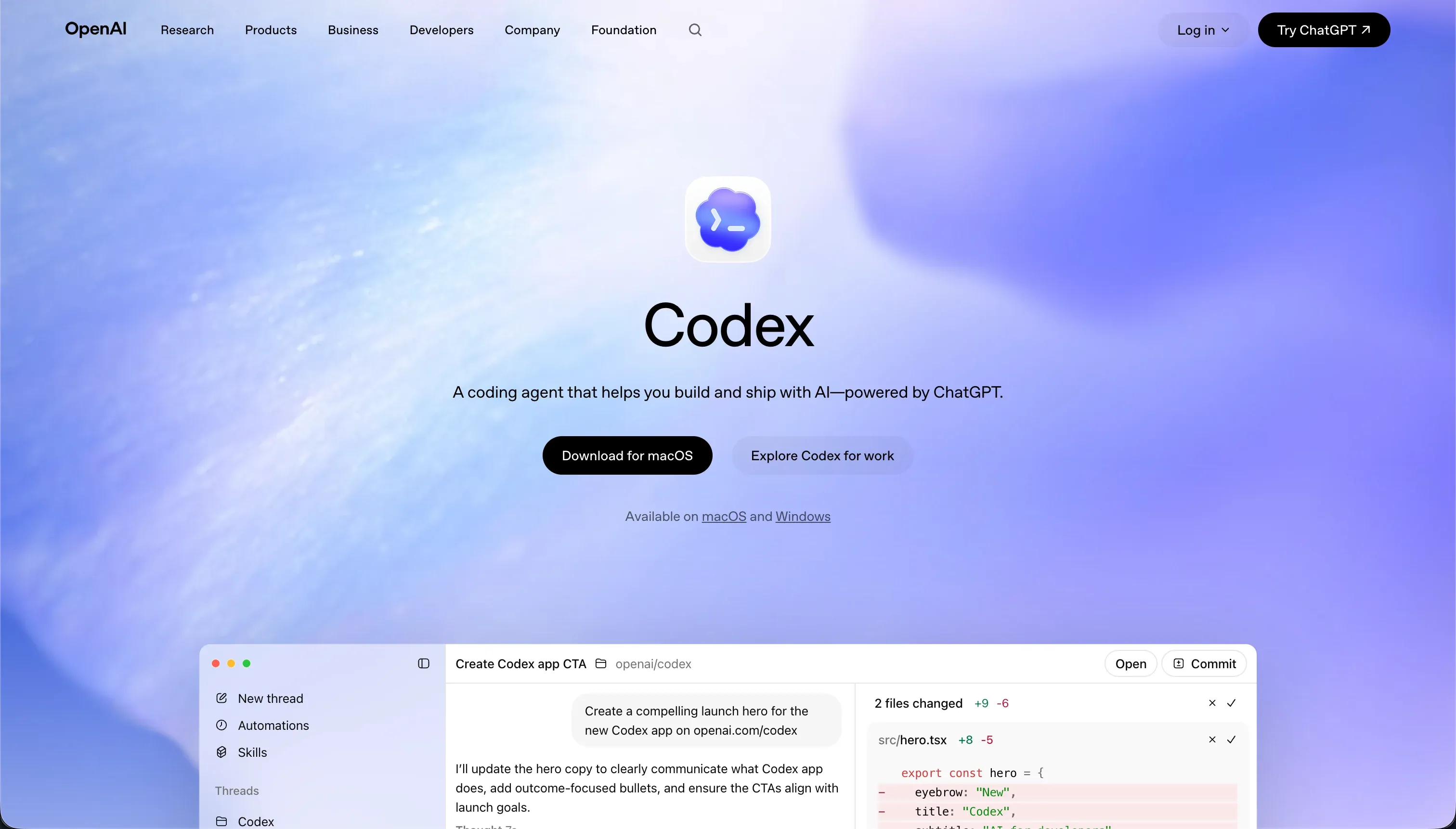 Codex homepage snapshot
Codex represents a different philosophy for SaaS builders: rather than running in a browser container or a locked-down platform, it operates directly inside your local repository via a command-line interface. This makes it a natural fit for developers who already have a preferred stack and environment setup. You get AI-driven code generation, git branch creation, and test execution without sacrificing local control. The standout capability is parallel task execution.
It ranks fifth because it is strictly an assistant, not a platform. Codex will not host your app, manage your production database, or configure your authentication system. For non-technical founders, this means it has a very steep learning curve compared to managed browser options. However, for a developer who wants to run multiple development branches concurrently and merge PRs directly into a custom stack, it is a highly efficient engine. Full review.
6. v0 - the front door of the MVP
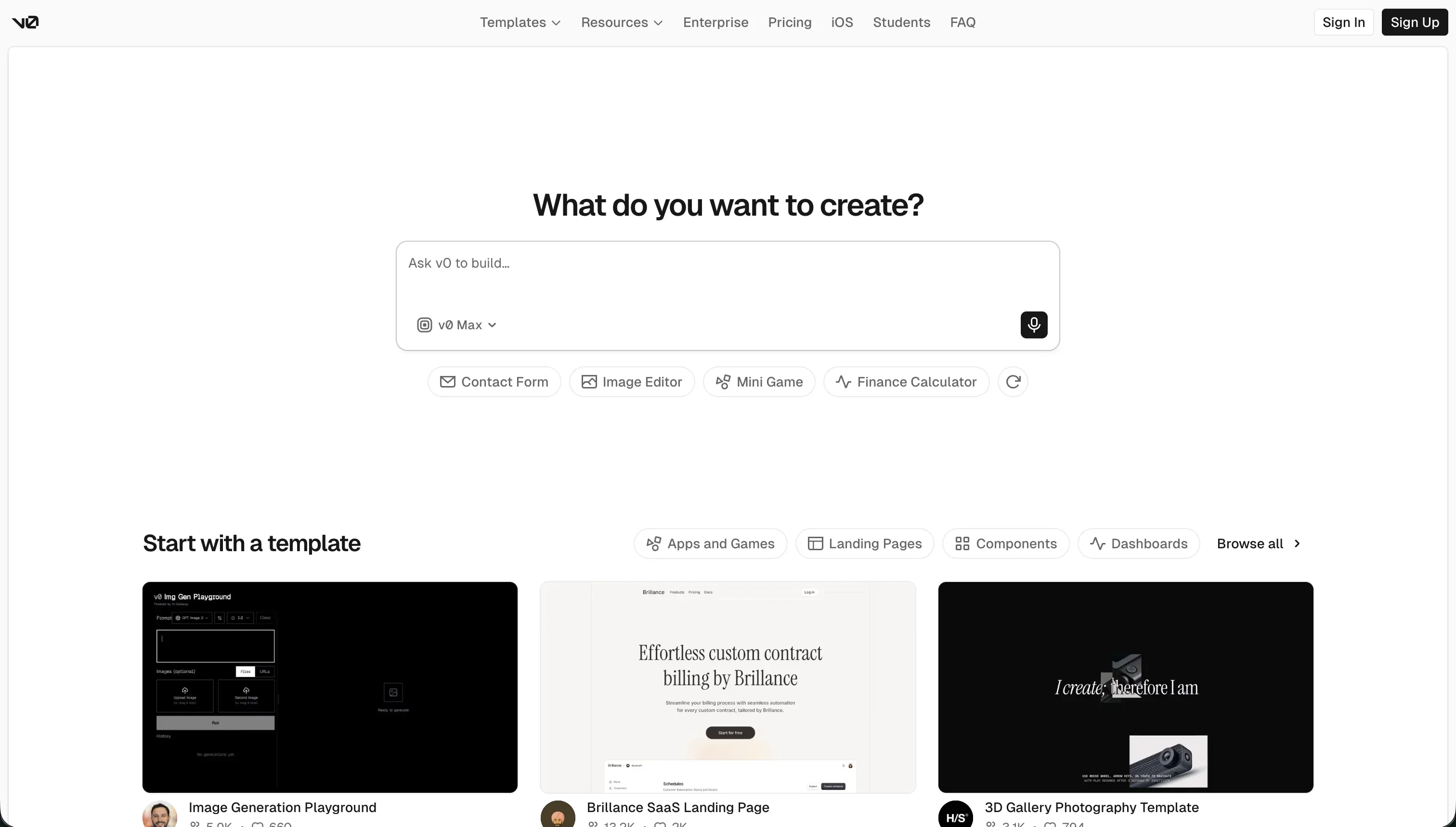 v0 homepage snapshot
Every SaaS needs a landing page and a credible interface, and v0 produces both faster than anything else, generating polished React components from a prompt or sketch. Smart MVP teams use it for the marketing site and early UI while the product takes shape elsewhere.
Ranking it as an MVP builder on its own would be lying: no database, no auth, no backend, so every feature customers pay for has to live somewhere else. It earns the spot as the best companion tool on the list. Full review.
Also tried
Base44 bundles database, auth, and hosting in one prompt, which sounds MVP-perfect, but community reports of outages, platform updates breaking production apps, a backend that can’t be exported, and login pages you can’t brand make it a hard sell for something customers pay for - details in our Base44 review. Claude Code is a genuinely strong coding agent, but it’s a terminal workflow with pay-as-you-go token billing, which makes it a power tool for developers rather than an MVP platform; it shows up best as a sidekick to a stack you already own.
Building for your business instead?
If your SaaS MVP is actually a B2B application - like a secure client portal, partner directory, internal tracker, or specialized CRM - building a custom codebase from scratch is often unnecessary overhead. You will spend weeks implementing authentication, user roles, billing hooks, and responsive data views. Softr lets you build these apps visually using prebuilt components connected directly to Airtable, Google Sheets, or Softr Databases. You get secure, role-based permissions and flat, predictable pricing, allowing you to validate your business idea without writing code or managing servers. Read more in our internal tools ranking.
How to pick
One question sorts most founders: what is your MVP, really? If it’s business software - a portal, a workflow tool, a B2B product where the value is the service rather than a bespoke interface - build on Softr and spend your energy on customers instead of code. If it’s a custom product and someone on the team can own real software, Replit gets you furthest in one place, with Cursor waiting for the day the codebase deserves it. And whatever you pick, run the boring test before your first invoice: create two customer accounts, put different data behind each, and try hard to see the other one’s. The tools that pass that test by design are the ones that let you sleep after launch.