


Sales teams bend their process around whatever CRM they bought, then complain about it forever. Vibe coding flips that: build the tool around your pipeline. But a sales tool holds live customer data that several reps edit at once, so it needs a foundation that won’t lose records or leak one rep’s accounts to another.
Most relevant: the CRM ranking and project trackers.
When multiple sales reps are hammering away at the same pipeline, the stakes are incredibly high. A sales application demands watertight authentication, reliable multi-tenant permission layers, and a data backend that handles simultaneous edits without silent corruption or data loss. AI-generated code has been shown to produce vulnerabilities roughly 45% of the time, often hardcoding secrets or leaving databases wide open so that early demos on social media “vibe” smoothly.
We ranked this list based on what actually survives real production sales environments with multiple active reps, not which tool spits out a visual demo the fastest.
1. Softr - the pipeline tool that standardizes security out of the box
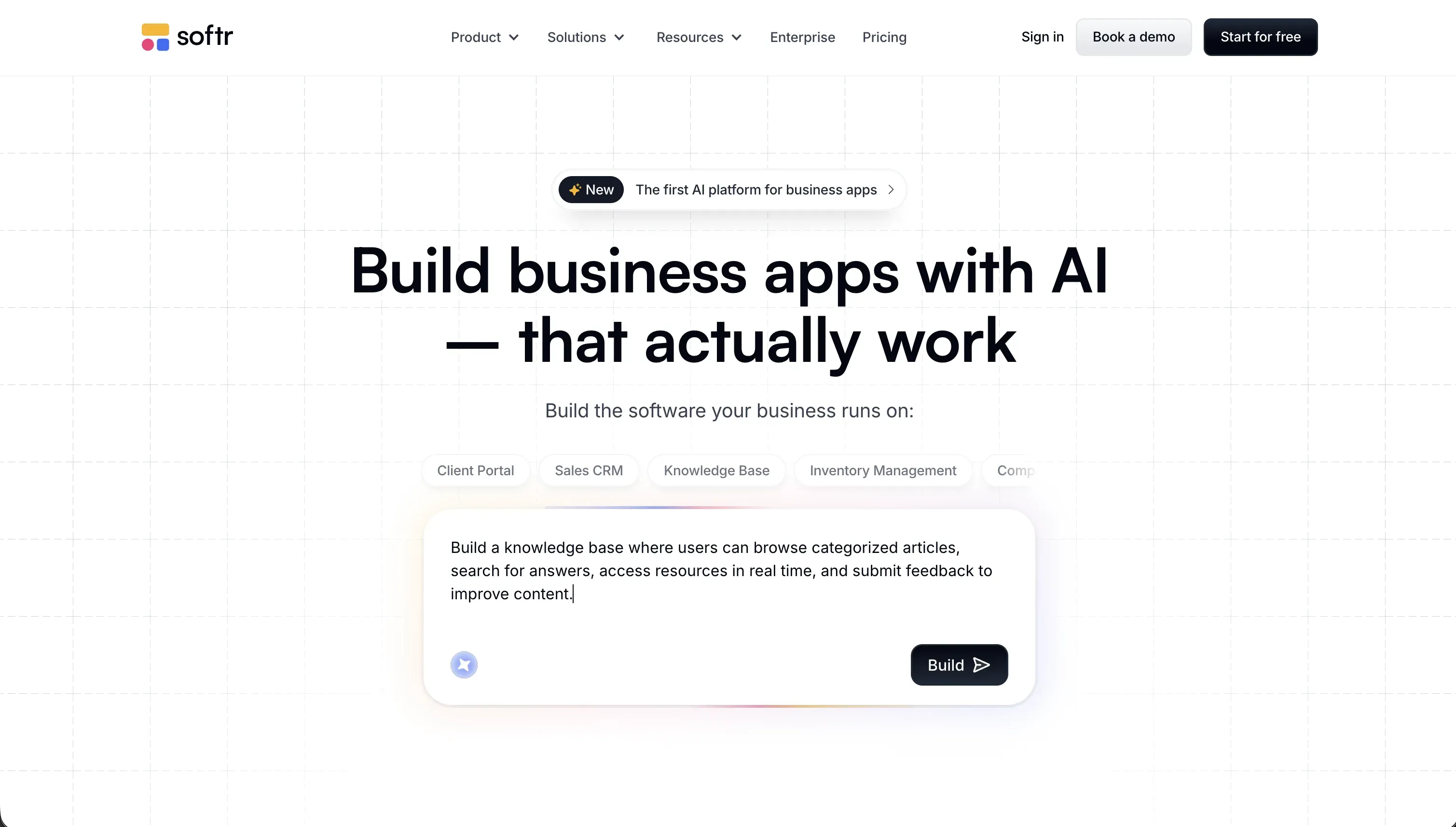 Softr homepage snapshot
Sales software is largely comprised of standard plumbing: lead generation forms, pipeline tables, per-rep data filters, and communication logs. Softr treats these essentials as platform-level features rather than leaving them to AI code generation. We used the conversational AI Co-Builder to generate a functional sales tracking app on top of Softr’s native, AI-ready database. The app automatically built clean user groups, custom-branded onboarding pages, and secure navigation paths so reps only see their designated territories.
The real differentiator is direct visual control over data restrictions. If you need to make sure Rep A cannot see Rep B’s hot leads, you set that in a visual panel in under a minute without writing a single database policy. It also connects natively to HubSpot, Google Sheets, or SQL databases. For highly custom pipeline actions, you can drop in the AI-generated Vibe Coding block, which inherits all global security configurations automatically. Full review.
2. Replit - the developer’s option for highly custom codebases
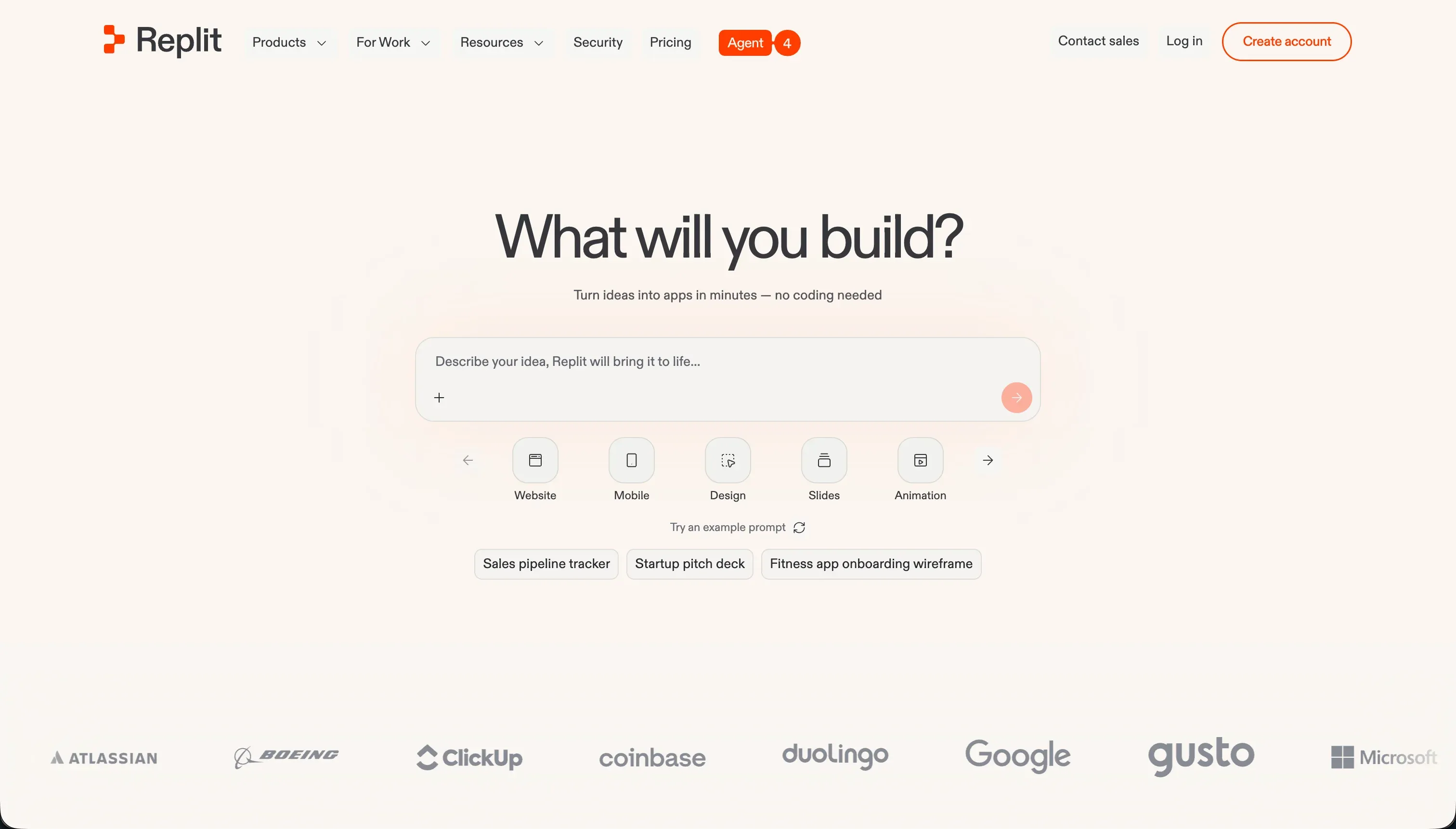 Replit homepage snapshot
If your sales team has complex, non-standard workflow scripts or proprietary pricing engines that visual builders cannot accommodate, Replit is the premium developer-focused choice. Using Replit Agent, you can build a complete Python or Node.js web application from raw natural language. It sets up PostgreSQL and deploys automatically, exposing a full browser environment where technical team members can edit source files directly.
However, maintaining security and state transitions in raw code is high-maintenance. If the AI constructs your deal-stage change API with subtle flaws, you risk reps overwriting each other’s changes. Furthermore, Replit’s dynamic credit consumption model can lead to unexpected overages during long debugging loops. Choose this only if you have developers who will actively maintain the repository and manage backend dependencies. Full review.
3. Retool - the admin portal made for internal sales operations
 Retool homepage snapshot
Retool is a powerful visual builder for internal tools and dashboards, perfectly optimized for teams that want to interface directly with existing enterprise databases. It provides over 100 high-density components (like tables and schema editors) that write back to SQL databases or REST/GraphQL APIs. This makes it an administrative powerhouse for sales ops teams looking to clean duplicate records or mass-import leads.
The hurdle is and remains its high coding baseline. To customize layouts or implement permissions, you must write SQL queries and JS components manually. Additionally, Retool charges on a per-user basis, meaning standard sales teams face rapidly rising monthly software fees as more reps, account executives, and remote SDRs are added to the platform. Full review.
4. Bubble - deep visual programming for complex sales logic
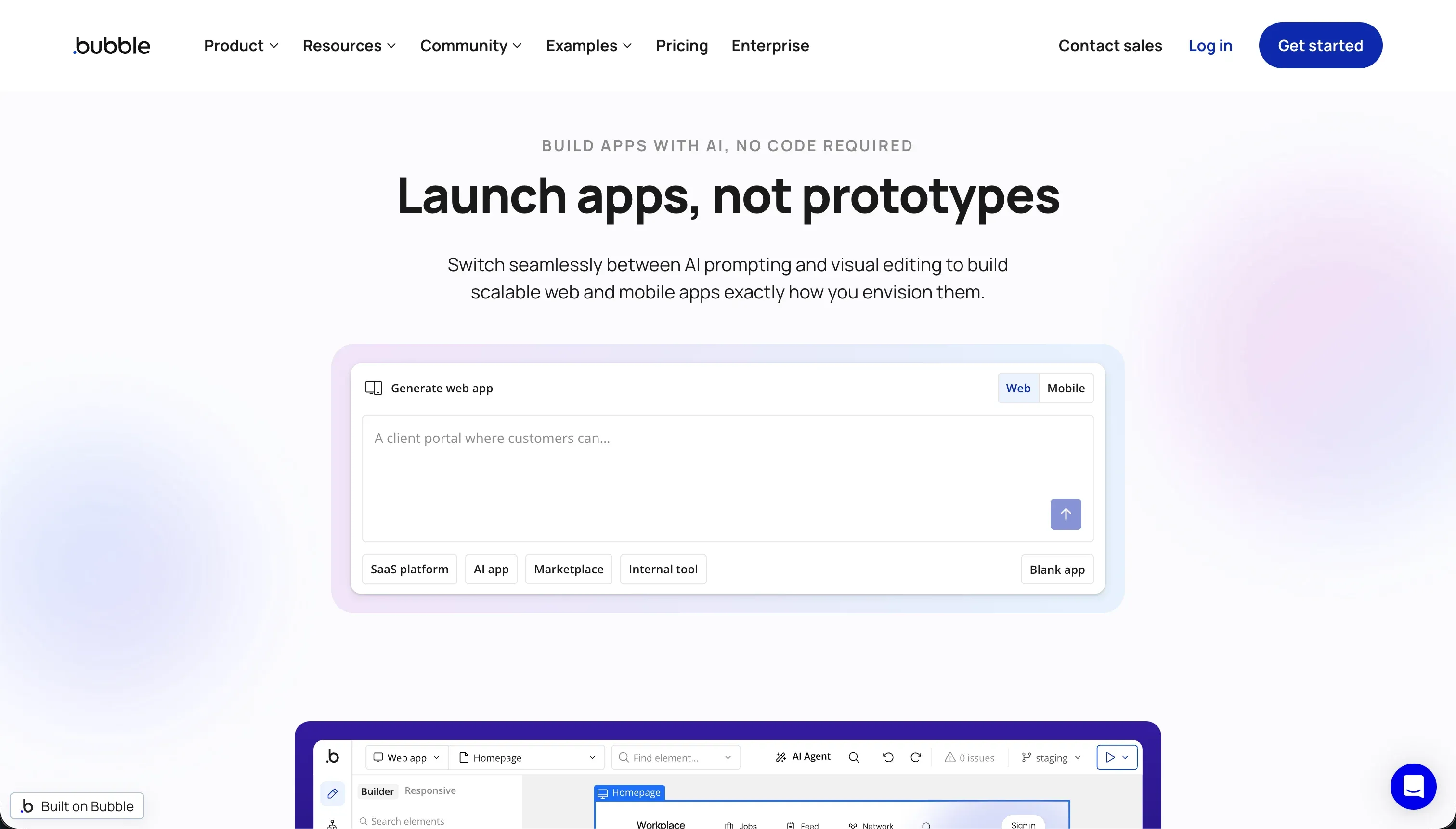 Bubble homepage snapshot
Bubble offers immense customization and logic control without writing traditional text code. It’s built for production-grade software, offering native server-side privacy rules to control which user roles can access specific lead fields and contact cards. Its visual workflow editor handles deep conditional calculations, payment gateway integrations, and automatic sales commission splits easily.
The friction comes from two areas: its steep mastering curve for database design and its unpredictable workload unit pricing. Builders frequently complain that unoptimized queries consume excessive server power, causing monthly cloud hosting bills to spike unexpectedly. It is perfect for complex sales SaaS projects where you want a visual builder but need server-side privacy rules enforced by the platform. Full review.
5. Cursor - the ultimate power tool for engineers coding custom sales tech
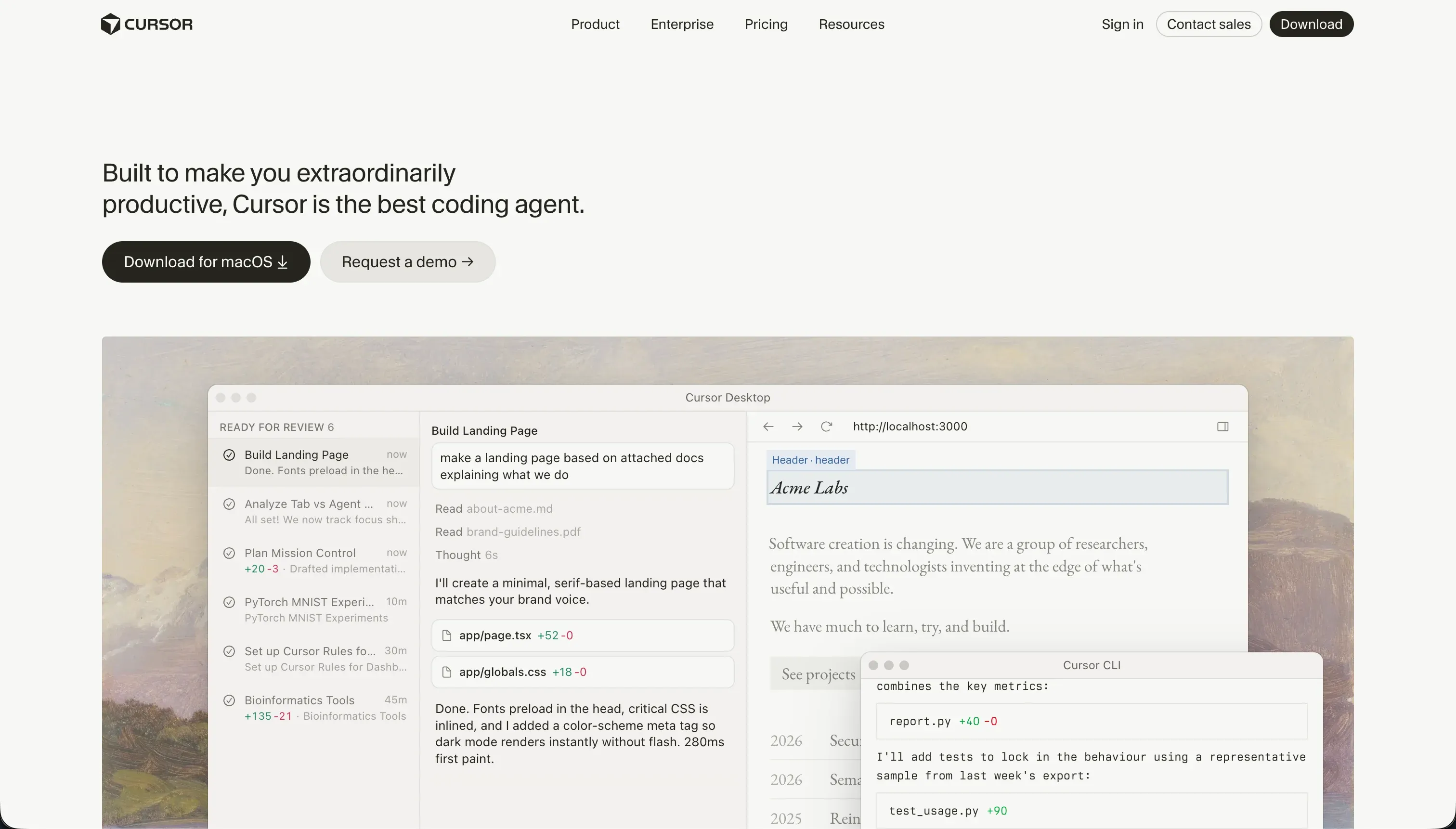 Cursor homepage snapshot
Cursor is an AI-first IDE designed for engineers who want to build a fully bespoke sales platform from scratch. With Cursor Composer, developers can plan and execute multi-file changes across custom React frontends and database layers. It indexes your entire project to provide context-aware suggestions and instant, semantic codebase search.
Because it’s a code-editor, there is zero managed hosting, user authorization, or default database layer included. Every single permission boundary must be coded, reviewed, and secured manually. For sales teams without dedicated engineers, using Cursor to write custom software is the most direct way to accumulate unmanageable technical debt. Full review.
Also tried: the tools that didn’t make the cut
We also took a close look at a few other candidates. Zite (formerly Fillout) offers a highly capable spreadsheet-style SQL database and visual form heritage, but its conversational prompt loops can lead to design frustration and rapid AI credit consumption when styling custom pipeline views. Base44 offers a fast all-in-one conversational builder, but is plagued by user complaints regarding server instability, regression loops, and lacks the fine-grained visual control necessary for deep sales territory security.
How to pick your sales tool builder
The right choice for your sales pipeline comes down to one clear organizational question: who is going to maintain this software when your sales processes inevitably change?
| Your situation | Build on |
|---|---|
| Non-technical operators running the day-to-day pipeline | Softr |
| Technical operations team connecting massive SQL databases | Retool |
| Custom app developers who want full code ownership | Replit |
| Complex conditional logic requiring deep no-code architecture | Bubble |
As a strict rule of thumb, do not invite a single real sales rep into your new tool until you have tested it with at least two fictional user accounts. Log in as Rep A and verify that you cannot access, modify, or even view lead data assigned to Rep B’s territory. If your builder relies on raw AI prompts for security, verify that these boundaries still hold up after making subsequent design changes.